
Opinion / Culture, Intellectual Property & Ownership
Run DMC Built the Look. Who Gets Paid for the Costume?
You have bought the costumes for years. Follow the money behind Halloween, then use Run DMC’s experience to protect the business you are building.
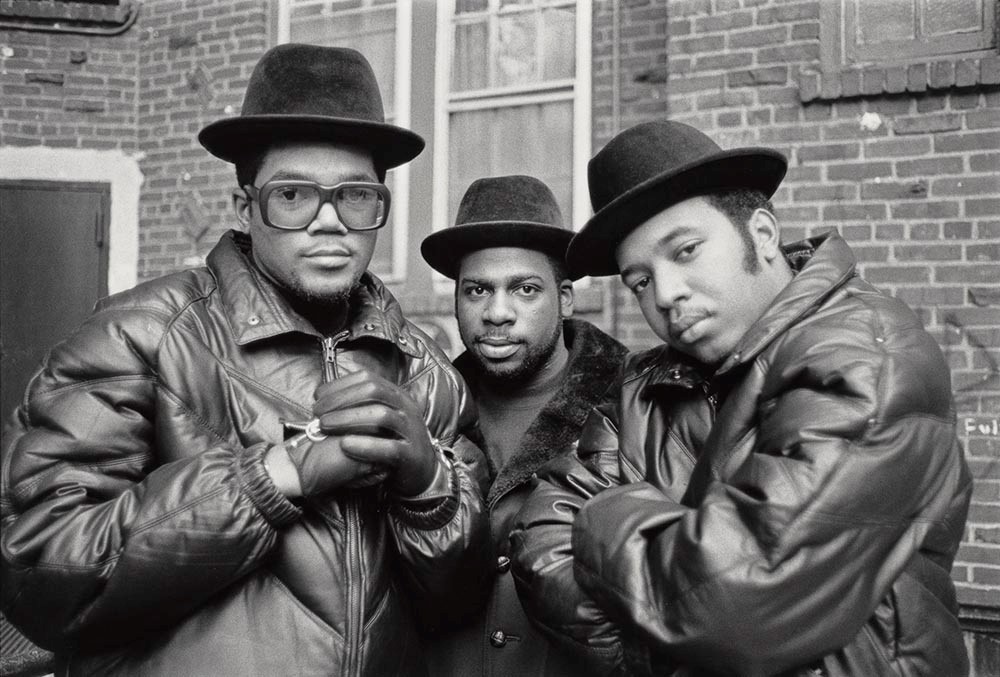
I was about five years old with a homemade Run DMC costume.
My mother's belt around my neck. My grandfather's hat and glasses.
That was the outfit. A few things from the family closet, and I was Run DMC.
Growing up, Halloween meant trick or treating and my mother inspecting the candy afterward. We heard all the stories. Razors in the apples. Homie the Clown snatching kids. Those rumors followed us through childhood.
I never saw a bad apple. Never saw Homie either.
Back then, I was thinking about the candy. Now I think about what I remember hearing Rev Run say about how they had been robbed.
That memory made me look at the costume differently.
I could put on my grandfather's hat and glasses, use my mother's belt as part of the outfit, and people knew what I was supposed to be. Run DMC had built something recognizable enough for a little boy to recreate with things already in the house.
That is cultural influence. Put a version of that look in a package and sell it, and now we are having a business conversation.
Who owns what is being sold? Who gets paid because the customer recognizes it? What happens when the next recognizable thing belongs to your business?
Let's be clear. The goal here is to learn from an experience somebody else already had to live through. Run DMC's experience gives business owners a reason to prepare before the demand, the imitation and the lawyers arrive.
The costume conversation is real
There is a directly relevant exchange in DMC's December 1, 2023 appearance on Drink Champs, episode 390. Around 1:42 in the iHeart version, N.O.R.E. describes his wife buying their son a lookalike Run DMC Halloween outfit. DMC then describes trying to challenge lookalike costumes and the frustration of seeing sellers alter an element. His proposed response is to put out an official version.
The business lesson is bigger than the costume: you can be recognizable enough to generate demand while still having to fight over which parts of that recognition you control.
DMC's account of changing an element is not a universal legal rule. There is no blanket permission to copy a brand because you changed one detail. Trademark analysis includes whether buyers are likely to be confused about source, sponsorship or approval. The USPTO explains how trademarks identify a source and how their protection relates to particular goods and services.
The answer for an entrepreneur is to identify the assets, establish ownership and build the commercial position while the brand is growing.
They actually took the dispute to court
On December 29, 2016, Run DMC Brand LLC, identified in its complaint as owned by McDaniels, sued Amazon, Walmart, Jet and other defendants. The company alleged unauthorized uses of its trademark on products including hats, glasses and clothing, and demanded $50 million. That was a demand, not a $50 million award. The complaint also described an Adidas endorsement agreement worth $1.6 million.
I followed the case beyond the $50 million headline. The court docket shows that Walmart, Jet and the other defendants apart from Amazon were voluntarily dismissed without prejudice on February 28, 2017. The litigation continued against Amazon.
On March 5, 2018, Judge J. Paul Oetken dismissed the case after the parties reported a settlement in principle, allowing 30 days to apply to restore it. On May 11, Run DMC Brand LLC filed a notice voluntarily dismissing Amazon with prejudice. The docket marks the case closed. Those public entries do not disclose the settlement amount. The $50 million was the original demand, not a disclosed recovery.
My takeaway is that registration gave the company rights to enforce, but enforcing them still meant a legal process stretching into 2018. I would prepare for that expense and build a licensing program before someone else starts selling my brand.
Look inside the exhibits attached to the complaint. They show actual advertised prices: $35 for a costume hat, $60 to $63 for a costume kit, and $16 to $18 for a bucket hat and glasses kit. Those are historical listing prices captured in litigation, not proof of how many units sold.
When I look at that history, I see why brand protection belongs in the operating budget from the beginning.
An authorized endorsement agreement puts permission and compensation into a transaction. A disputed product can put the brand owner into a different transaction: documenting listings, demanding an accounting and pursuing enforcement.
Both involve the same valuable name. One begins with an agreement. The other begins with an allegation that someone used it without one.
Do not reduce that history to they should have trademarked it. They already had a registered mark. That is what makes this useful to the business owner who thinks filing the paperwork finishes the job.
Registration gives you an asset to enforce. You still need to monitor the market, document disputed uses, build distribution and negotiate licenses that put your business into the transaction. Protection and participation have to work together.
Your costume purchase is part of a $4.4 billion category
The National Retail Federation forecasts $13.5 billion in US Halloween spending for 2026, including approximately $4.4 billion for costumes. Here is the costume breakdown it reports.
| Costume buyer | Projected US spending in 2026 |
|---|---|
| Adults | $2.00 billion |
| Children | $1.50 billion |
| Pets | $920 million |
The components total $4.42 billion, which rounds to the $4.4 billion headline. These are survey based spending projections, not completed sales.
Yes, $920 million to dress the pets.
That is why an entrepreneur should stop dismissing a costume as a small purchase. A small receipt can be one unit in a substantial category.
A current Target listing for a Rubie's Deluxe Old School Rapper kit shows $26.99. It lists a bucket hat, glasses, chain and ring, explicitly references Run DMC in the description, and identifies Pure Costumes as the seller and shipper. The listing does not disclose a Run DMC royalty arrangement.
At that advertised price, 10,000 units would produce $269,900 in retail sales. At 100,000 units, $2,699,000. Those quantities are an illustration of scale, not reported sales of this product, and sales are not profit.
The actual price is small enough to disappear into a family shopping trip. The potential volume is large enough to deserve an ownership conversation.
The worldwide business
A Research and Markets announcement estimates the global Halloween costume market at $5.88 billion in 2025, forecasting $8.03 billion by 2031. This is a commercial research estimate for costumes and accessories, with a different year and method from NRF's US consumer survey.
For 2026, Savvy forecasts £705 million in total UK Halloween spending. Roy Morgan and the Australia Retail Council forecast A$510 million across costumes, decorations and treats in Australia.
These are different categories and currencies. They are not numbers to add together. They show that the customer buying an identity for a party is participating in an international business.
Your brand strategy needs to account for where products are manufactured, advertised and sold. The customer may be local. The supply chain and the imitation may not be.
Does Bob Marley's family get paid for that hat?
The knitted hat with the locks attached raises the same ownership question. The answer is that a generic hat does not automatically generate a Marley royalty. We would need the specific product, its marketing and the relevant rights or agreement to establish a payment obligation.
There is a documented business behind that familiar accessory. Imposta Costumes says Robert Berman started Rasta Imposta in 1992 after selling a cap with attached wool dreadlocks for $20 and a beer. That is the company's account of its beginning, not evidence of a Marley license.
Marley's family has separately defended merchandise rights. In the 2015 Fifty Six Hope Road Music v. A.V.E.L.A. decision, the Ninth Circuit upheld a false endorsement judgment involving Marley images on merchandise and likely confusion about approval. It also affirmed rejection of a separate Nevada publicity claim, and its narrow holding reflected defenses the defendants had waived.
The case was about actual merchandise using Marley images. It did not give the family ownership of locks, knitted hats or Rastafari.
For the business owner, this is the useful distinction: permission to use a photograph, permission to use a trademark and permission to commercially use someone's identity are different questions. Your supplier saying the image is cleared may not answer all three.
Spirit controls the place where the customer spends
Spirit Halloween shows you another part of the transaction. The company announced more than 1,550 stores across North America for 2026.
People see a temporary sign on an empty storefront. I see a distribution network built around a deadline.
Its real estate criteria favor highly visible temporary space, ideally with 5,000 to 50,000 square feet of sales floor, approximately 35,000 people within three to five miles, and at least 25,000 cars passing daily.
That is demand underwriting. They are looking for reachable customers, not simply empty buildings.
For another view of the economics, Enigma estimates that an average Spirit location generated approximately $313,000 in card sales during October 2025. That is a third party card sales estimate for one month, not audited total revenue or profit. Enigma also estimates that roughly three quarters of the chain's card sales occur in October.
The concentrated season is the opportunity and the risk. Inventory, staffing, rent, logistics and opening dates all have to work while the customer still wants the product.
Now connect it back to the costume. The property owner controls the space. The retailer controls access to the shopper. The manufacturer supplies the product. A license can put the rights holder into that chain.
If your contribution is the identity that creates demand, decide how your business will participate before someone else controls every route to the customer.
Protect the business you are actually building
This applies to the restaurant with a distinctive mascot, the trainer whose name starts selling programs, the designer whose graphics get copied and the creator whose character becomes more valuable than any individual post.
Start by identifying what you own and what you merely use.
| Business asset | What to establish now | Future opportunity to prepare for |
|---|---|---|
| Name and logo | Clearance, ownership, appropriate trademark protection and renewal records | Merchandise, new product categories and licensing |
| Artwork, photos and mascot designs | Written rights from creators and records of permitted uses | Packaging, advertising, adaptations and resale |
| A founder's or spokesperson's identity | Written commercial permissions and who can grant them | Endorsements, campaigns and licensed products |
| Distribution and customer accounts | Company control, access records and contract terms | Expansion, financing and a sale of the business |
| Supplier and license agreements | Approved products, territory, term, reporting and transfer provisions | New channels, international sales and acquisition |
The Copyright Office explains that ordinary functional clothing is generally outside copyright protection, while original artwork, patterns and certain embellishments can qualify. Ownable expression and a general style are different things. Spend money protecting the assets the law actually recognizes.
An LLC filing, a domain purchase and a trademark registration do different jobs. None is a substitute for a complete ownership file. Nor does paying a freelancer automatically settle every right you will need later. The Copyright Office explains the limited circumstances in which a commissioned work qualifies as a work made for hire. Put the intended rights in writing.
Then monitor the places where your customers shop. Keep dated evidence of suspicious listings and have a process for evaluating and responding to them. Protection has to become an operating expense and an operating habit.
Prepare the deal before you celebrate the percentage
Here is a clearly hypothetical licensing agreement to show why the paperwork matters.
A $40 costume sells 100,000 units. That produces $4 million at retail. If the defined royalty base is $20 per unit and the rate is 10%, the earned royalty is $2 per unit, or $200,000.
Ten percent of the royalty base is 5% of that retail sales figure.
If you already received a $100,000 minimum guarantee that is fully creditable against royalties, the additional amount due is $100,000. Total compensation is $200,000 under those assumptions, not $300,000.
Those are model terms, not Run DMC's, Marley's or Spirit's disclosed terms. Use the interactive calculator to change them and see the effect.
When I negotiate, I want the definition of net sales, permitted deductions, payment schedule, reports, audit access and approval rights. If someone wants exclusivity, I want performance commitments and a way to recover the rights if they do not perform.
A large percentage attached to a weak definition can produce a small check. A recognizable brand attached to a restrictive agreement can become difficult to expand or sell.
Appropriation is part of it. Ownership is the business lesson.
I am not interested in policing everybody's Halloween outfit. I am interested in what entrepreneurs can learn when businesses monetize a recognizable identity and the people behind it have to fight over their place in the transaction.
Culture, religion and identity can also be reduced to caricatures. A royalty does not automatically make a degrading product respectful. And an offensive product does not automatically satisfy a legal claim. Those questions need their own answers.
But the business owner reading this should leave with something to do.
Pull the ownership file for your business. Can you prove who owns the name, logo, photographs, characters and licensed material? Can your company expand their use or transfer those rights to a buyer?
If you cannot answer those questions, you have identified work to do before the next deal, product launch or acquisition.
Before you approve the next campaign, commission the next mascot or let a manufacturer put your name on a product, know what you own, what you are granting and how you get paid. Prepare for the business your brand could become.
If I were acquiring that business, I would inspect the ownership chain, transferable licenses, actual collections, remaining contract terms and customer concentration. Followers and recognition might explain the demand. Enforceable rights and collectible cash flow would determine what I could buy.
At five, I could borrow a hat, glasses and a belt and become Run DMC for Halloween. I understood the look before I understood the business.
Today, I want the entrepreneur reading this to understand both.
You do not have to become Run DMC to create something somebody else wants to sell.
You need to prepare before they do.
The conversation
Could you prove who owns your business’s most recognizable assets before the next licensing deal or acquisition?
Loading the conversation…