
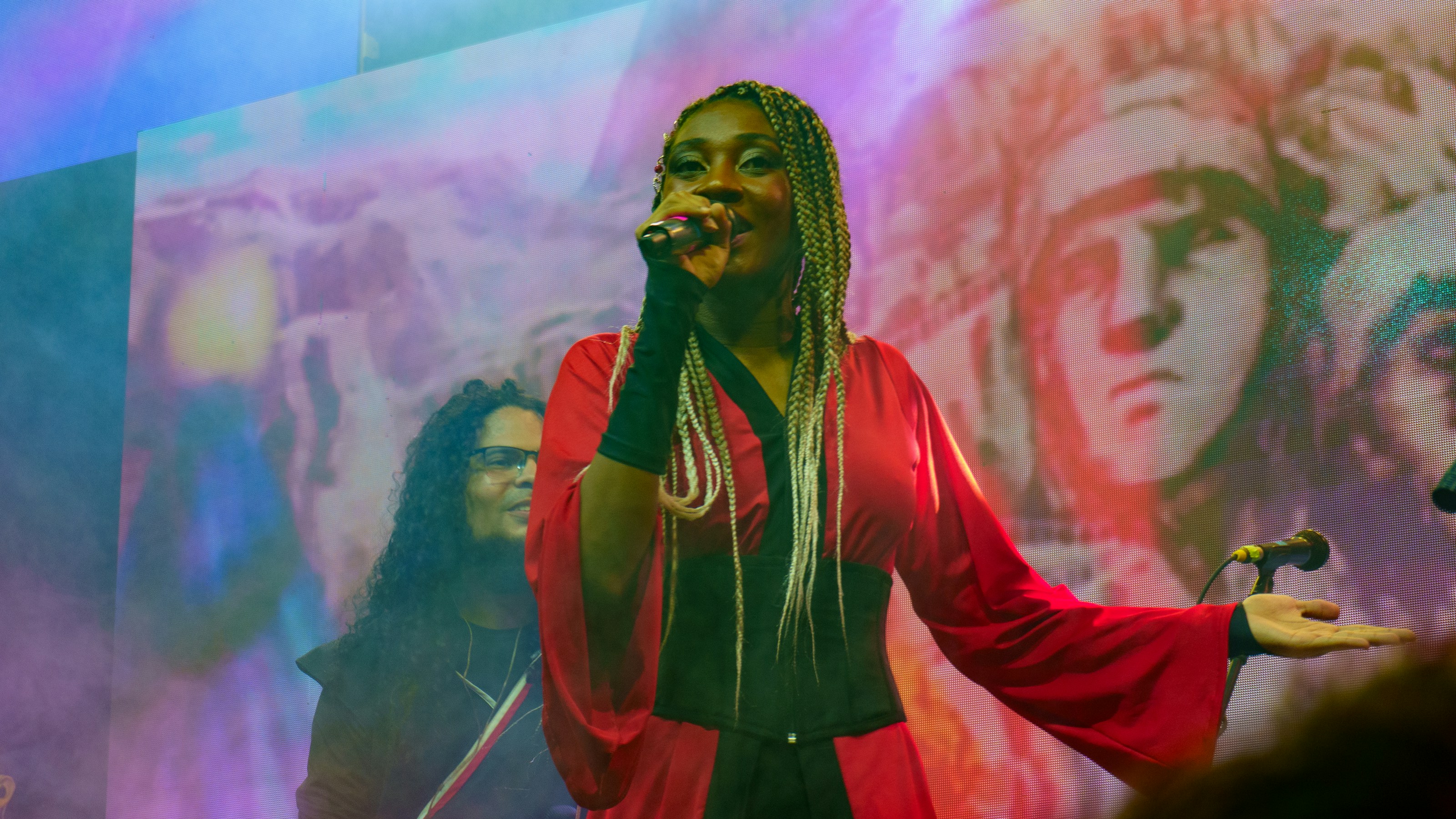
A familiar song can become unfamiliar without changing its name. That is the possibility worth holding onto in Meshell Ndegeocello’s October 19 Fresh Air conversation with Tonya Mosley: not recognition as the final pleasure, but recognition as the door to something else.
Discussing Synonym, Ndegeocello describes Cat Power’s contribution to their version of “Don’t You Want Me” as prompting her to reconsider her own approach. She also credits Levon Henry’s horn arrangement on “I Got You Babe,” performed with Anohni. Her account of making the record is more interesting than a tidy story about celebrity chemistry. It gives the exchange between musicians some texture.
What interests me is the picture of authority in that exchange. The accomplished musician does not have to be the person who arrives with every answer. She can be the one who hears a collaborator’s idea and lets it change the work. That is a richer image of artistic confidence than the immaculate genius who permits everyone else to carry the equipment.
The arranger sits precisely where that image tends to get inconvenient. A song’s identity does not live only in its words and melody. Think of the space around a voice, the moment an instrument enters, the decision to make an apparently certain feeling sound unsettled. These are ways of telling the story. Describing them as finishing touches mistakes the room for its wallpaper.
That is not an argument for turning listening into homework. Nobody should need a personnel examination before being allowed to love a record. Credits can be an invitation instead: a name to follow because something caught the ear. Curiosity feels different when it begins with pleasure rather than an obligation to prove good taste.
BAM’s presentation of Ndegeocello alongside Samora Pinderhughes, under Hanif Abdurraqib’s poetry series, offers a related frame. Music, language and collaboration need not occupy separate rooms. The program’s emphasis on her bandleading is a useful reminder that a musician can shape the encounter without standing alone at its center.
Of course, a recognizable artist’s name helps listeners decide where to begin. There is nothing shameful about coming for the voice you already know. The trouble starts when recognition becomes a fence: we want the familiar person, the familiar feeling, and no evidence that anyone has complicated either one. A cover then becomes a test of resemblance instead of a new act of interpretation.
Ndegeocello’s account suggests another kind of listening. Let the familiar title bring you in, then leave room for another musician to rearrange your expectations. Ask what a collaboration makes possible, not simply which name is the biggest. The star does not get smaller because the people around her come into focus.
There is a particular generosity in art that makes room for an answer it did not plan. More than another argument about who deserves the spotlight, that is what this conversation offers: the possibility that the light gets more interesting when someone else moves it.
Sources & further reading
knkx.org · Read the sourcebam.org · Read the sourceThe conversation
Meshell Ndegeocello wants the arranger in the picture.
Loading the conversation…