
Opinion / Culture, Acquisitions & Ownership
Black Enough for the Culture. Too Black for the Deal.
Mona, Cardi B and what I have learned about colorism, business ownership and who gets the deal.
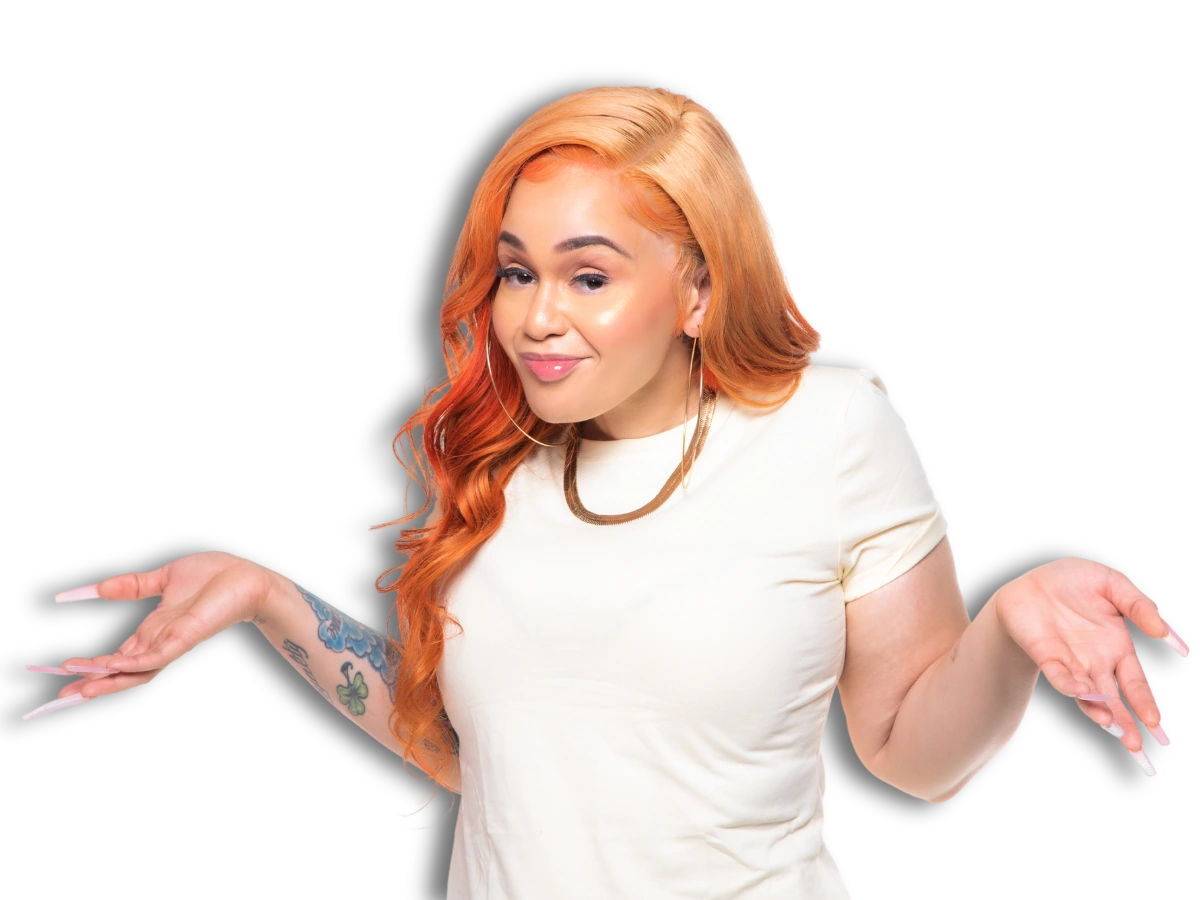
Cardi B is defending the work. Mona is questioning how the market rewards it.
Cardi agrees that colorism exists. Her objection is to having her success reduced to complexion while her talent, work, strategy and persistence are discounted. In her November 2 response, she also argued that a short excerpt from a longer 2024 livestream misrepresented her position. Her defense deserves to be stated accurately. Cardi’s response and Mona’s argument, November 2, 2026
Mona Love, known as Don’t Call Me White Girl, is asking whether a darker skinned Black American woman with comparable talent would receive the same opportunities. In the October 29 reporting on her comments, Mona included herself among women who may have benefited from colorism. She praised Cardi’s talent while arguing that complexion and perceived background can affect how brands receive somebody. Mona’s comments, October 29, 2026
A brand can call one person authentic and another unprofessional. A lender can see promise in one buyer and risk in another. What changes when the qualifications are comparable but the complexion, accent or perceived background changes?
That is where I agree with Mona. I believe Cardi worked for what she has. I also believe a person can earn their success while receiving an advantage somebody else does not get.
I am Jay Moxie, founder of Moxie Capital Partners. I work in acquisitions, capital and business strategy. I have seen those judgments affect a promotion, a negotiation and who gets heard at the deal table.
This is the first time I am speaking publicly about these experiences with race. Black Americans need to discuss what happens in those rooms.
And the discussion has to distinguish being Black from being Black American. Cardi herself made that distinction in her interview with Zendaya for CR Fashion Book: “just because we’re not African American, we are still black.” Cardi B interviewed by Zendaya, CR Fashion Book
When I say Black American here, I am talking about a particular people, lineage, history and culture in this country. Shared African ancestry does not make every Black community’s experience interchangeable or erase the culture Black Americans created here.
That includes our language. Who can say nigga? Who cannot? Who gets to decide? Cardi has publicly discussed her use of the word, explaining in a VladTV interview that it was normal for her and referring to African ancestry and the way minorities are viewed by white people. Cardi B on ancestry and language, VladTV, 2017
Growing up around us, marrying one of us or making money in a genre we created does not put somebody above questions about how they use our language or treat our people.
I want immigrants and the children of immigrants in this discussion. We encounter one another in the same schools, workplaces and markets.
What I object to is somebody performing Black American identity for an audience, then treating Black Americans as people they do not want to be identified with. I call that cultural blackface when our identity becomes a costume while our people are treated with contempt.
Look at how far hip hop has traveled. The Smithsonian documents its growth from the Bronx into a form with worldwide influence. Black American expression became a global commercial force. Smithsonian on hip hop’s origins and worldwide influence
We have seen this commercial pattern before. The Smithsonian describes record labels marketing white artists’ covers of Black rhythm and blues songs as rock and roll, with some covers outselling the original recordings. The sound crossed boundaries while Black originators faced racial barriers. Smithsonian on rhythm and blues, cover recordings and rock and roll
That is why I laugh when people act as if Black Americans have no culture. The world keeps selling it. Who receives the credit, contracts and ownership?
Growing up in Essex and Union counties in New Jersey, I saw the punishment on both ends of the color spectrum. Light skinned Black kids, mixed race kids, kids with light eyes or straighter hair could get picked on for supposedly being soft, weak or not Black enough. My dark skinned homies could get called ugly, mean or aggressive before they had done anything.
Being bullied for being light skinned is real. So is being treated as more marketable because you are light skinned. Your classmates and a corporate decision maker do not have to reward the same thing.
I have light skin and brown eyes, and I have benefited from that. Getting through a door and being treated equally after entering it are different experiences. I have lived both.
Let me take you back to 1999. I was 20, working for an athletic retail sneaker chain and training to become a store manager.
There were darker skinned Black trainees who had entered the management program before me. Our numbers were pretty similar. I moved ahead of them and was promoted first. I had not even finished the final training module.
I took the promotion. I also recognized how my appearance could help me while darker skinned colleagues waited.
My first store was in Connecticut, doing $1.3 million in annual revenue. This was not a typical rookie assignment. Our district covered New York, New Jersey and Connecticut, and I was its only Black store manager.
It was an urban store, and they needed a Black manager. That was how the company matched the face to the assignment: Black manager, urban store.
My district manager told me meeting the company’s minimum numbers would not be enough. I had to smash those numbers just to keep my job and maybe get promoted to another urban store.
He also told me I could not run that store the way the white female manager I was replacing had run it. She had not been fired. She received a lateral move and continued working.
I respected him for telling me the truth. He was a white man. I was a Black man. We were talking out loud about the unwritten rules at that company. My performance would reflect on him too.
I increased the store’s revenue. He later left the company and recruited me to the new one.
My appearance helped me through one gate. Being a Black American shaped the expectations behind it. The unequal standard was real. So was my respect for the man willing to discuss it.
Complexion is one part of how people get read. Accent and national origin can change the reception too.
I have heard the line, “I no Black.” That is the expression I am talking about. In arguments with people from African and Caribbean backgrounds, I have heard it used to separate the speaker from Black Americans and the stereotypes attached to us.
I call that selective association. If somebody welcomes the commercial benefit of Black American culture, then reaches for a separate identity when Black Americans are being demeaned, I have a problem with that. Respect for our culture has to include respect for our people.
In my experience, some households teach that separation. A child taught that they are better than Black Americans is being taught a hierarchy. When proximity to whiteness becomes proof of superiority, I call that white supremacy, regardless of who teaches it.
Da’Vinchi, the Haitian American BMF actor, drew criticism after discussing American work ethic with Cam Newton. On October 27, he apologized for his wording on The Breakfast Club, said he had meant the nation broadly rather than Black people, and acknowledged slavery as a reality shaping the present rather than an excuse. Da’Vinchi’s response and apology, October 27, 2026
His clarification belongs in the record. My question is what happens when that work ethic stereotype reaches the person deciding whether a Black American gets hired, financed or sold a business.
Now take that question across an acquisition table. I have been on the ground doing due diligence at hotels and motels around the Atlanta airport. I am telling you what I have seen and heard.
I have been in negotiations over 15 hotels in College Park and nearby parts of the Atlanta airport corridor. Every one was Indian owned. Not one was Black owned. In every one, I encountered resistance to selling to a Black American.
These are live negotiations. We signed NDAs, we have the contracts, and I still want to buy. I am describing my experience without identifying the counterparties or disclosing their deal documents.
I have recorded training calls in which Indian participants used “nigger” while discussing never selling to a Black American. More than once.
Do not explain my experience to me while ignoring those calls. A racial refusal is racism. I am not going to dress it up as a misunderstanding about financing.
I hire the best people I can find. A white man may lead an acquisition conversation for my company. An immigrant woman may represent us. A Black American is still making the decision and running the operation.
I have completed purchases from sellers who did not know the company was Black American owned. The face across the table could get a hearing the Black American principal struggled to get.
I have purchased gas stations with expired inventory on the shelves in Black neighborhoods. In acquisitions involving Indian sellers and sellers from the Ismaili community, I encountered unpaid workers, workers without legal work authorization, disordered tax and accounting records, and safety and code violations.
Expired stock does not become valuable inventory because it appears on a spreadsheet. Unpaid labor does not make a business efficient. Ignoring a repair does not eliminate its cost.
How much claimed profit survives lawful payroll, clean accounting, safe conditions and proper upkeep? Pay the workers. Replace the stock. Fix the building. Then show me the earnings.
I have seen the bulletproof glass and the absence of customer service in our neighborhoods. Protecting a worker does not excuse treating customers with contempt. Maintain the store. Stock fresh merchandise. Treat people with respect.
If you collect the neighborhood’s money every day, the neighborhood deserves a decent operation.
Read the airport corridor hotel reviews too. In February and July 2026, guests publicly reported dirty rooms, drainage problems, missing air conditioning vents, neglected maintenance and poor service. Those are guest accounts, and they belong in the diligence. The reviews speak for themselves. Airport corridor guest reviews, February and July 2026
Do not sell me a story about superior operators while expecting me to ignore the conditions, the payroll and the repairs. A network’s success does not make lawbreaking disappear or make the people outside it less capable.
Put those experiences beside the ownership record.
Hartsfield Jackson handled approximately 106.3 million passengers in 2025 and ranked first for passenger traffic in ACI World’s April 2026 rankings. That is an enormous customer base moving through a region celebrated for Black culture and business. ACI World, 2025 passenger rankings
Here is the number I want people to sit with: 67.7%. AAHOA stands for the Asian American Hotel Owners Association. Its Oxford Economics study using 2022 data estimated 1,501 AAHOA properties in Georgia. About two out of every three hotels in the state. AAHOA and Oxford Economics, 2023 report using 2022 data
AAHOA described its membership in a 2015 Supreme Court brief as chiefly first, second and third generation Indian Americans. This is a hotel owners’ trade association with advocacy, professional development, member benefits and lending resources. That is organized business power. AAHOA Supreme Court brief, January 2015 · AAHOA: mission, member resources and history
Now look at the population. The 2020 to 2024 American Community Survey estimates, reported by Indian American Voter Atlas and CensusEasy, put Georgia’s Asian Indian population within the Asian alone category at 177,084, about 1.62% of the state. The Pakistani estimate in that category is 14,074, about 0.13%. Those are period estimates, not current headcounts. 2020 to 2024 ACS Asian Indian estimate, Indian American Voter Atlas · 2020 to 2024 ACS Pakistani estimate, CensusEasy
The Census Bureau’s current QuickFacts table lists Georgia as 32.4% Black. Almost a third of the state. U.S. Census Bureau QuickFacts, Georgia
That is an AAHOA measure, not a separate Ismaili or Pakistani ownership share. The Census does not collect religious affiliation; this research established no current Georgia Ismaili population count. AAHOA and Oxford Economics, 2023 report using 2022 data · U.S. Census Bureau, religious affiliation is not collected
Look at what they built by organizing: industry influence, member benefits and access to business resources. Look at who gets introduced, financed and offered the next deal.
The ownership divide
of Georgia hotels in the AAHOA study
1,501 estimated properties · 2022 dataNow examine the population.
Tap a measureCurrent Census QuickFacts racial category. It does not isolate Black American lineage. Read the source.
Hotel properties and residents have different denominators. AAHOA includes a member’s ownership interest or senior corporate role. Its share is not an exact Indian, Pakistani or Ismaili ownership share. No Georgia Ismaili population count or statewide Black hotel ownership percentage was established.
Who owns the hotels those travelers sleep in, the gas stations they stop at and the commercial buildings collecting rent?
I am talking about College Park and the nearby airport corridor. A metro Atlanta average does not answer that question.
The Census Bureau’s current QuickFacts table lists College Park as 81.6% Black. That is more than four out of every five residents. U.S. Census Bureau QuickFacts, College Park
East Point is listed as 75.7% Black. U.S. Census Bureau QuickFacts, East Point
Hapeville is listed as 35.9% Black. U.S. Census Bureau QuickFacts, Hapeville
Nearby South Fulton is listed as 90.6% Black. These are separate municipal populations, not a corridor average. The racial category does not isolate Black American lineage. U.S. Census Bureau QuickFacts, South Fulton
This is Atlanta. For Black Americans, that name carries Sweet Auburn, the Civil Rights Movement, our historically Black colleges, music, business and political power. Ownership belongs in that promise. Discover Atlanta: civil rights, Sweet Auburn and the Atlanta University Center
In May 2023, GPB and The Atlanta Voice reported nine Black owned hotels in metro Atlanta, citing NABHOOD. Nine. GPB and The Atlanta Voice, 2023
College Park’s own hotel directory lists 33 properties. Who gets the equity, the income and the opportunity to buy the next one? College Park municipal hotel directory
NABHOOD, the National Association of Black Hotel Owners, Operators and Developers, lists nine Georgia hotels. None of those addresses is in College Park, East Point, Hapeville or the immediate airport corridor. NABHOOD Georgia hotel directory, consulted November 3, 2026
Around the busiest airport in North America, beside a city that is 81.6% Black, our expanded public search identified zero Black owned hotels or motels in College Park, East Point or Hapeville. I have not found one in my due diligence either.
The gate exists. I have heard the racial refusal on tape and encountered the resistance across the acquisition table. Stop telling me the only thing separating Black Americans from ownership is our work ethic, intelligence or willingness to invest.
Public officials need to answer too. How are qualified Black American developers and buyers considered for public and private hotel development arrangements? Show us the selection process, financing requirements and agreements.
Do not tell me Black Americans do not have the means. South Fulton’s city profile describes it as one of the most affluent communities in south metro Atlanta and reports median household income of about $81,798. That is a citywide measure, not a count of hotel buyers. City of South Fulton, community profile
I was already negotiating the acquisitions. What happened when a qualified Black American came to buy?
Now look at the gas station and convenience store network. The faith based group I mean here is the Ismaili community documented in the Atlanta Retailers Association’s records.
The Atlanta Retailers Association describes itself as a faith based association of convenience store and gas station owners and operators with over 1,000 members. Atlanta Retailers Association
Its audited 2023 financial statements identify a mission serving the U.S. Ismaili community and describe negotiated volume pricing, group discounts, incentives and training. ARA audited financial statements, 2023
In Wilson v. Pepsi Bottling Group, a March 2009 federal court order described ARA’s members as overwhelmingly immigrants from India or Pakistan. Membership required majority ownership or management by members of the Ismaili community, and could end when a store no longer qualified. A 2007 Pepsi agreement included $2 per eligible case in base funding, subject to its conditions. Wilson v. Pepsi Bottling Group, March 2009 order
ARA won summary judgment on the white plaintiffs’ racial discrimination claims because the evidence was insufficient to establish race discrimination. The claim against Pepsi remained pending at that stage. Wilson v. Pepsi Bottling Group, March 2009 order
My objection is to Ismaili affiliation or any other membership rule being used as cover for racial exclusion. When the rule is that a qualified Black American cannot buy, I call that economic redlining. Calling a network private does not excuse a racial refusal.
Before closing, I want to know which rebates transfer, which terminate and which require a new agreement. Underwrite what the buyer can keep.
At the historical $2 per eligible case term, 500 cases a month would mean $12,000 a year. Lose that amount from recurring earnings, and a four times valuation falls $48,000. The calculator below lets you test how supplier access, lawful payroll and upkeep change the price. Its operating figures are assumptions, not results from a particular acquisition.
What earnings survive the sale?
Adjust the operating assumptions. Watch earnings and the purchase price change together.
There is evidence that unequal treatment can start before a formal lending decision. In a 2024 CFPB pilot, trained Black and white testers made 100 visits to 50 bank branches in two counties. Black testers were given slightly stronger financial profiles. Lenders expressed interest in applications from 23% of Black testers versus 40% of white testers. They discussed unrequested alternative products with 59% of Black testers versus 39% of white testers. This was a limited pilot in Virginia and New York, not an Atlanta approval rate. CFPB matched pair pilot, 2024
A person discouraged before applying may never appear in a rejection count. The gate can close before anyone calls it a denial.
The gate before the application
Same inquiry. Different reception. Inspect both results from the CFPB’s matched pair pilot.
Lenders expressed interest in applications from 23% of Black testers and 40% of white testers. The Black inquiry received less encouragement despite a slightly stronger assigned financial profile.
I want Black Americans to speak up the way Mona did. Describe the complexion, the seller or the opportunity that disappeared before anybody issued a formal denial.
Organize the evidence. Preserve the calls, correspondence, qualifications and timeline. Compare closing inventory with the seller’s representations, payroll with advertised labor costs, and inspections with the repairs supposedly completed.
At Moxie Capital Partners, the work is evaluating businesses and commercial real estate, examining earnings, structuring transactions and working with capital partners and operators. The conversation has to reach the acquisition table.
Howtify belongs in that work too: acquisition education that helps people examine a business, its property, supplier agreements and retainable earnings. Learn the business behind the price.
I am with Mona because acknowledging an advantage is part of telling the truth. I can examine my promotion and respect the white manager who spoke honestly with me. I can also confront the owners who wanted my company’s money until they understood a Black American controlled it.
Black Americans do not need to make our experiences comfortable for the people benefiting from our silence.
I say this to my Haitian homies and my white homies too: if you do not believe those stereotypes, speak up. If your household raised you to repeat them, question what you were taught. Do not pass it on like gospel.
Challenge it when the buyer is not in the room. Challenge the relative who says Black Americans cannot take care of anything. Challenge the seller who stops listening at a Black face. That is how an unwritten rule gets passed down.
We need the records. We need the capital. We need the operating discipline. And we need ownership.
If the gate is being held shut because we are Black American, name the conduct, prove what happened and build enough power to stop asking the gatekeeper for an invitation.
For consulting, speaking and media inquiries, visit JayMoxie.com.
The conversation
Reader conversation
Loading the conversation…