
Opinion / Media, Acquisitions & Ownership
Funk Flex, Elliott Wilson and the Extinction of Hip Hop’s Gatekeepers
They controlled the microphones, the magazines and the access. Then the market changed.
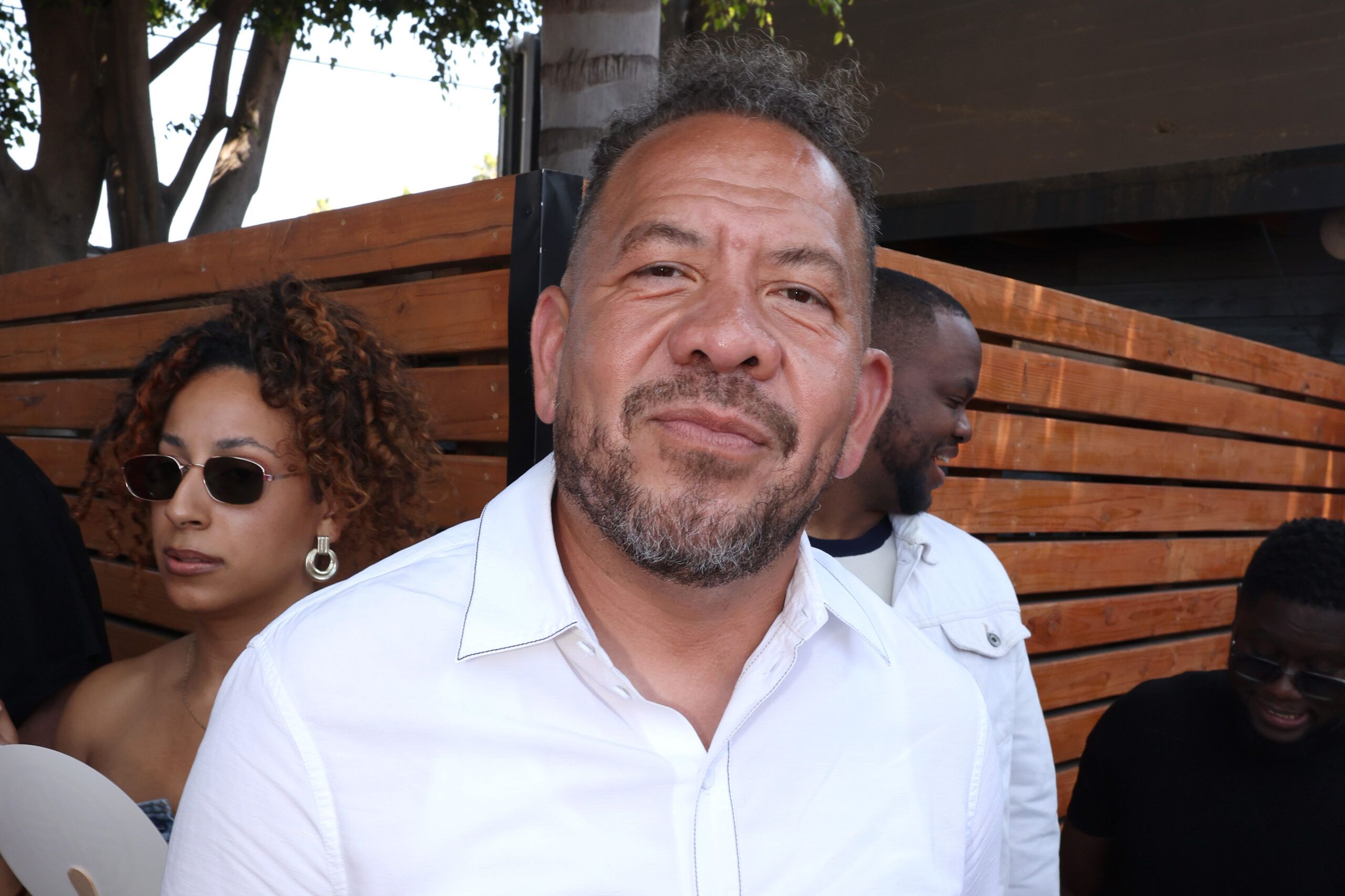
October 20 was supposed to be about the Knicks.
After 53 years, Madison Square Garden was celebrating an NBA championship. Walt Frazier was presenting rings. The World Champions banner was going up.
And somewhere inside the Garden, Funk Flex was involved in a confrontation that would become its own attraction on social media.
Clips of the confrontation started circulating online.
I laughed.
Here was a man who spent decades dropping bombs on everybody else’s records, suddenly becoming the clip everybody wanted to play.
HipHopWired’s October 23 report describes competing accounts from Flex and former Hot 97 personality TT Torrez and her husband, Shadow Stokes. Torrez’s representatives alleged that Flex shoved her. Flex described the confrontation as an attempt to provoke him into a payout.
I’m not deciding what happened from a video.
I’m interested in something else.
The man who once helped decide what got played had no control over the public playing him.
That is a perfect illustration of the transition happening throughout media.
Flex and Elliott Wilson came from an era when established media personalities controlled access to valuable audiences.
Both became influential through institutions that defined hip hop coverage.
And both are now being discussed publicly in ways that would have been harder to imagine when radio and magazines controlled much of the conversation.
Their age isn’t the problem.
The problem is what happens when the market changes and your business model doesn’t change with it.
Everybody Wants to Be a Boss
Hip hop came from entrepreneurship.
DJs built their own audiences. Promoters rented their own venues. Artists financed their recordings. Independent labels created ways to reach customers.
Then corporations recognized the opportunity.
Radio stations became powerful. Magazines became influential. Record labels controlled promotional budgets.
And people working inside those institutions gained enormous authority.
Somewhere along the way, authority started being confused with ownership.
That’s always interested me about hip hop.
Everybody wants to be a hustler, a boss, a tough guy.
There’s nothing wrong with confidence or ambition.
But being the person with the microphone isn’t necessarily the same as owning the station.
Having access to artists isn’t the same as owning the music.
And being an executive at a publication isn’t the same as controlling its capital.
We were taught to get an education, get a good job and build a career.
That’s reasonable advice.
But people weren’t necessarily taught how to acquire businesses, negotiate equity, build recurring revenue or develop successors.
So someone can become successful at a job while never building an independent operation that captures the full economic value of their influence.
That’s the distinction I want to examine.
Not who looks like a boss.
Who actually controls the assets?
Flex Had Cipha Sounds. What Happened to the Succession Plan?
Flex didn’t have to search for young talent.
Cipha Sounds was already there.
Cipha started at Hot 97 as Flex’s intern and developed into an established radio personality.
In a February 2015 interview with The FADER, Cipha explained that he originally thought he would succeed Flex. Eventually, he realized Flex wasn’t leaving and developed other professional ambitions.
That’s Cipha’s own account. It doesn’t establish that Flex promised him a position or personally prevented his advancement.
But it raises a legitimate business question.
Could they have built a larger organization where both men advanced through ownership?
Flex had the relationships, audience recognition and experience. Cipha had developed the skills and public identity to operate independently.
The opportunity wasn’t necessarily for Flex to surrender his job.
It was to build a company.
Develop new programming. Establish ownership interests. Create independent distribution. Recruit additional talent.
Flex could have remained an owner while younger personalities operated and expanded the business. Succession could have become part of his earning strategy instead of leaving the original position at the center of everything.
Now, Flex has undertaken ventures outside radio, so I’m not claiming he never developed business interests.
What I question is whether his best known media influence became a sufficiently durable and transferable institution.
If I were acquiring a media business built around Flex, I’d want to know how much value survives when Flex stops appearing every day.
That’s the difference between a personality and an enterprise.
The Financial Statements Tell the Bigger Story
Hot 97 is part of MediaCo. The transaction that moved Hot 97 and WBLS from Emmis into MediaCo dates to 2019.
In 2024, MediaCo expanded through its Estrella Media acquisition.
For the first six months of 2026, MediaCo reported approximately $65.4 million in consolidated revenue, up 10% from the prior year. It also reported a net loss of approximately $18 million.
The audio segment shows why the traditional business is under pressure.
| MediaCo audio segment | First half 2025 | First half 2026 |
|---|---|---|
| Revenue | $28.928M | $21.354M |
| Segment operating expenses* | $29.782M | $28.979M |
| Segment operating loss | $0.854M | $7.625M |
Six months ended June 30. The expense totals include depreciation, amortization and other segment items, as presented in MediaCo’s segment discussion. Source: MediaCo’s June 30, 2026 quarterly filing.
Audio revenue declined 26.2%.
Segment operating expenses declined only 2.7%.
The operating loss increased by $6.771 million.
Reported segment expenses amounted to approximately 136 cents for every dollar of audio revenue in the first half of 2026. A year earlier, the figure was approximately 103 cents.
Those numbers cover MediaCo’s audio segment, including radio, digital and events operations beyond Hot 97. They are not Hot 97’s standalone financial results. And that expense ratio is not a cash spending ratio.
But if I were evaluating an acquisition in that segment, those figures would demand attention.
Now consider another number.
MediaCo reported that digital accounted for 47% of its advertising revenue during the second quarter of 2026.
The parent company is building its business around a market where digital distribution matters enormously.
That should tell every longtime radio personality something.
Your history might make you recognizable. But your future value depends on how you compete in the current market.
Radio isn’t extinct. Its exclusive control over access is.
Elliott Wilson Is Facing a Different Version of the Same Problem
Elliott Wilson built a substantial career in traditional hip hop journalism.
He was editor in chief of XXL. He helped create the influential ego trip books. He founded Rap Radar, where he is identified as CEO.
And in April 2024, he joined the Uproxx organization as Editorial Director of Hip Hop Journalism across Uproxx, HipHopDX and Dime.
Those are important companies and editorial positions.
His credentials are real.
That’s precisely why I expect more from his business judgment.
Defending professional standards is reasonable. But traditional credentials don’t guarantee customers.
New creators can build audiences without first being hired by a magazine. Independent interviewers can reach the same consumers. And the ability to publish has become available to nearly everybody.
The question is no longer simply who has the best résumé.
It’s who can create a product that attracts an audience and operates profitably.
Elliott’s Business Disputes Are Now Part of His Public Brand
In his June blankSLATE episodes, SaVon Slater described a roughly $20,000 loss tied to podcast work involving Wilson. The episode descriptions present his account of the work and the payment dispute.
That is Slater’s account. It does not establish a court judgment, Wilson’s personal liability or the full terms of the parties’ agreement.
HotNewHipHop’s October 20 report described a planned partnership between Wilson and DJ Vlad that broke down over alleged business and budget disagreements.
Those accounts don’t establish Wilson’s financial condition or prove wrongdoing.
But they expose important questions about how independent media deals are structured.
If I’m funding an interview business, I need to know the economics before production starts.
Who owns the material?
Who pays the crew?
Who pays the talent?
Who controls the distribution?
How much revenue is realistically expected?
And who absorbs the loss if the audience doesn’t generate enough income?
Here’s a hypothetical production company facing that decision.
| Illustrative monthly operation | Amount |
|---|---|
| Advertising and sponsorship revenue | $15,000 |
| Production and editing | $7,000 |
| Talent and guest costs | $4,000 |
| Distribution and administration | $2,000 |
| Operating contribution | $2,000 |
That’s a 13.3% operating contribution margin before taxes and costs not included in the example.
Now suppose advertising and sponsorship revenue falls to $10,000 without a corresponding reduction in costs.
The operation loses $3,000.
The talent can be famous. The clips can go viral. The owner can have excellent relationships.
But the numbers still determine whether the business can continue.
These figures are hypothetical, not Wilson’s actual business results.
My criticism is about the public handling of business relationships and the importance of structuring deals before disagreements become public.
A reputation takes decades to build.
Poorly handled disputes can damage it in days.
Decorum Is Part of Business
Hip hop has never required everyone to behave like executives in a corporate boardroom.
The culture is outspoken. That’s part of its identity.
But being outspoken doesn’t excuse bad judgment.
When an influential personality becomes involved in a public confrontation, that affects how people perceive the brand. When business partners begin disputing payments or arrangements publicly, future partners may have questions.
That doesn’t prove anyone committed wrongdoing.
But it does create commercial risk.
If you’re going to present yourself as a boss, act like someone who understands the consequences of your decisions.
You can disagree without making every disagreement a spectacle. You can negotiate without putting your relationships on public display. And you can be respected without insisting that everyone else recognize your importance.
That’s not about age.
It’s about experience producing better judgment.
The Job Was Never the Business
One of the biggest advantages Flex and Elliott enjoyed was access to established institutions.
Hot 97 gave Flex distribution. XXL and later corporate editorial platforms gave Elliott institutional reach.
Wilson also created Rap Radar, which makes his independent media experience more substantial than someone whose entire career depended on employment.
But institutional influence and personal ownership still need to be separated when evaluating any specific venture.
The person whose salary depends on a corporation faces one kind of risk. The independent entrepreneur funding production and marketing faces another.
An artist can invest personal money in recording and promotion, then spend additional resources trying to reach a radio audience. Meanwhile, the personality making programming decisions may not bear any of that artist’s financial risk.
I’ve personally encountered paid promotional packages in the DJ pool business.
Paid promotion isn’t automatically unlawful payola. What was promised, what occurred and what was disclosed matter.
But the broader economic lesson remains.
The independent operator should understand exactly what they’re buying. And whenever possible, build channels that provide direct access to customers.
If you can create your own distribution, you reduce the leverage of anyone who controls somebody else’s platform.
That’s what the internet changed.
What Flex Could Have Built With Cipha
If I represented Flex during Cipha’s rise, my proposal would have been an independent media company where their interests were aligned through ownership.
Flex contributes his brand, relationships and distribution opportunities. Cipha contributes talent, programming and operating capacity.
The company negotiates and owns its original content rights. It develops sponsorships, events, production services and a direct audience.
Here’s a hypothetical monthly model.
| Revenue | Monthly |
|---|---|
| Four sponsored programs at $7,500 each | $30,000 |
| Digital advertising | $10,000 |
| Events and appearances | $15,000 |
| Production services | $10,000 |
| Total revenue | $65,000 |
| Operating costs | Monthly |
|---|---|
| Talent and production | $25,000 |
| Sales and marketing | $10,000 |
| Administration and technology | $5,000 |
| Total costs | $40,000 |
| Operating contribution | $25,000 |
That produces an illustrative annual operating contribution of $300,000.
It is not a claim about what the actual Flex or Cipha businesses earned. It excludes taxes, financing expenses and other costs that might apply.
The point is the structure.
Create a company with diversified revenue and more than one important personality. Give emerging talent room to operate. Develop successors. And establish contracts that turn the content and commercial relationships into assets.
Flex wouldn’t have needed to give Cipha his job.
The opportunity was to build a business where Cipha could become his partner.
What I Would Build Around Elliott
With Elliott, I’d start with his existing independent publishing experience and substantial editorial network.
I’d examine Rap Radar’s actual assets, commercial rights, costs and ownership arrangements before recommending any transaction.
Then I’d build around repeatable programming, clear production budgets and partnerships governed by written terms.
I’d want younger journalists and creators developing their own identities within the organization. I’d want interviews, commentary and original reporting that could generate income across multiple platforms.
And I’d make every proposed collaboration answer the same questions before anybody invested money.
Who contributes capital?
Who owns the work?
Who gets paid?
When does payment occur?
And who controls the commercial rights after the partnership ends?
Fame may help bring people to the negotiating table.
The agreement determines whether the deal makes business sense.
The Acquisition Test
If I were buying a media company associated with either personality, I’d separate recognition from transferable value.
| Business component | What I’d value |
|---|---|
| Audience | Direct access, retention and measurable engagement |
| Intellectual property | Rights to programming, formats and archives |
| Revenue | Collectible contracts, recurring income and margin |
| Management | A team capable of operating without the founder |
| Succession | Talent development and continuity beyond one personality |
I’d pay for assets capable of producing future income.
I wouldn’t pay an inflated multiple simply because the founder was once influential. And I wouldn’t assume that appearing powerful in public means someone controls valuable equity.
A buyer pays for expected future economic value.
Not yesterday’s reputation.
The Solution Is Ownership and Succession
Hip hop has always made room for the next generation.
That doesn’t mean older people have to disappear. Flex and Elliott have experience and relationships that could still create significant value.
The solution is to move from defending old positions to building institutions that develop new talent.
Flex could build around younger broadcasters and creators. Elliott could build around a new generation of independent journalists.
Hot 97 could be developed as one distribution channel inside a broader media operation. MediaCo already owns multiple platforms. The acquisition question is how effectively those assets work together and what the station itself can earn.
If I represented an independent artist, I’d evaluate direct distribution before paying a gatekeeper for access.
And if I were acquiring Hot 97, I’d demand station level financial statements, not assume that MediaCo’s segment figures tell me exactly what the station earns.
Then I’d underwrite its audience, operating costs, talent contracts, commercial rights and future cash flow.
The investment would be based on what I could build.
Not what the station meant thirty years ago.
The Market Already Made Its Move
On Knicks Ring Night, New York was celebrating a championship generations of fans had waited 53 years to see.
And elsewhere inside Madison Square Garden, one of the city’s most recognizable radio personalities was becoming viral entertainment.
That’s the image that started this column.
But the real story is much bigger than Funk Flex moving through a crowded room.
It’s about a changing media economy.
The value of controlling access is declining when audiences have other ways to reach the product.
Established personalities still have value. Their experience still has value.
But their brands need businesses capable of adapting to new technology, new competitors and new generations.
Flex had developing talent. Elliott built credibility at major editorial institutions and developed his own publishing brand.
They had opportunities to convert influence into durable ownership.
The question is whether they used enough of those opportunities to build businesses that can outlast their personal participation.
Age isn’t what I would underwrite. I would examine how each business competes in the market today.
And there’s the lesson.
You can spend decades controlling the gate.
Or you can own the business that builds the next entrance.
Jay Moxie | Moxie Talk
Sources and photograph credits
- Funkmaster Flex interview, May 18, 2010First person interview supporting the acknowledgment of Flex’s automotive and television ventures. Does not establish current private financial results.
- MediaCo quarterly filing, June 30, 2026Audio segment totals, segment scope and accounting definitions.
- MediaCo second quarter results, August 14, 2026First half consolidated results and the company’s reported 47% digital share of second quarter advertising revenue.
- Emmis transaction announcement, July 1, 2019Corrects the Hot 97 transaction chronology. The 2026 SEC filing provides subsequent ownership context.
- Cipha Sounds interview, February 11, 2015His own account of interning with Flex and expecting to succeed him. Does not establish a promised succession arrangement.
- UPROXX: Elliott Wilson author biographyCareer history and April 2024 editorial appointment.
- Rap Radar: AboutThe publication identifies Wilson as founder and CEO. Does not establish his current equity percentage or private financial results.
- HipHopWired, October 23, 2026Reports competing accounts of the MSG confrontation. Allegations remain attributed.
- HotNewHipHop, updated October 20, 2026Reports the failed Wilson and Vlad collaboration and public discussion of business disagreements. Does not establish private terms or finances.
- blankSLATE episode listingSaVon’s own episode descriptions characterize a $20,000 loss. The draft does not turn that statement into a verified personal debt or judgment.
- Knicks ring night coverage, October 20, 2026Reporting on the NBA championship ring and banner ceremony and Walt Frazier’s participation.
The conversation
Do radio and digital media owners create value for artists or charge for access to it?
Loading the conversation…