
Opinion / Entertainment, Acquisitions & Ownership
Jay Z, the NFL and the Price of Economic Power
Everybody wants to know whose side Jay Z is on. I'm asking who has the leverage, who negotiates the terms, and who owns the results.
Updated October 27, 2026: The opening now reflects the NFL’s official confirmation. Originally published October 26, 2026.
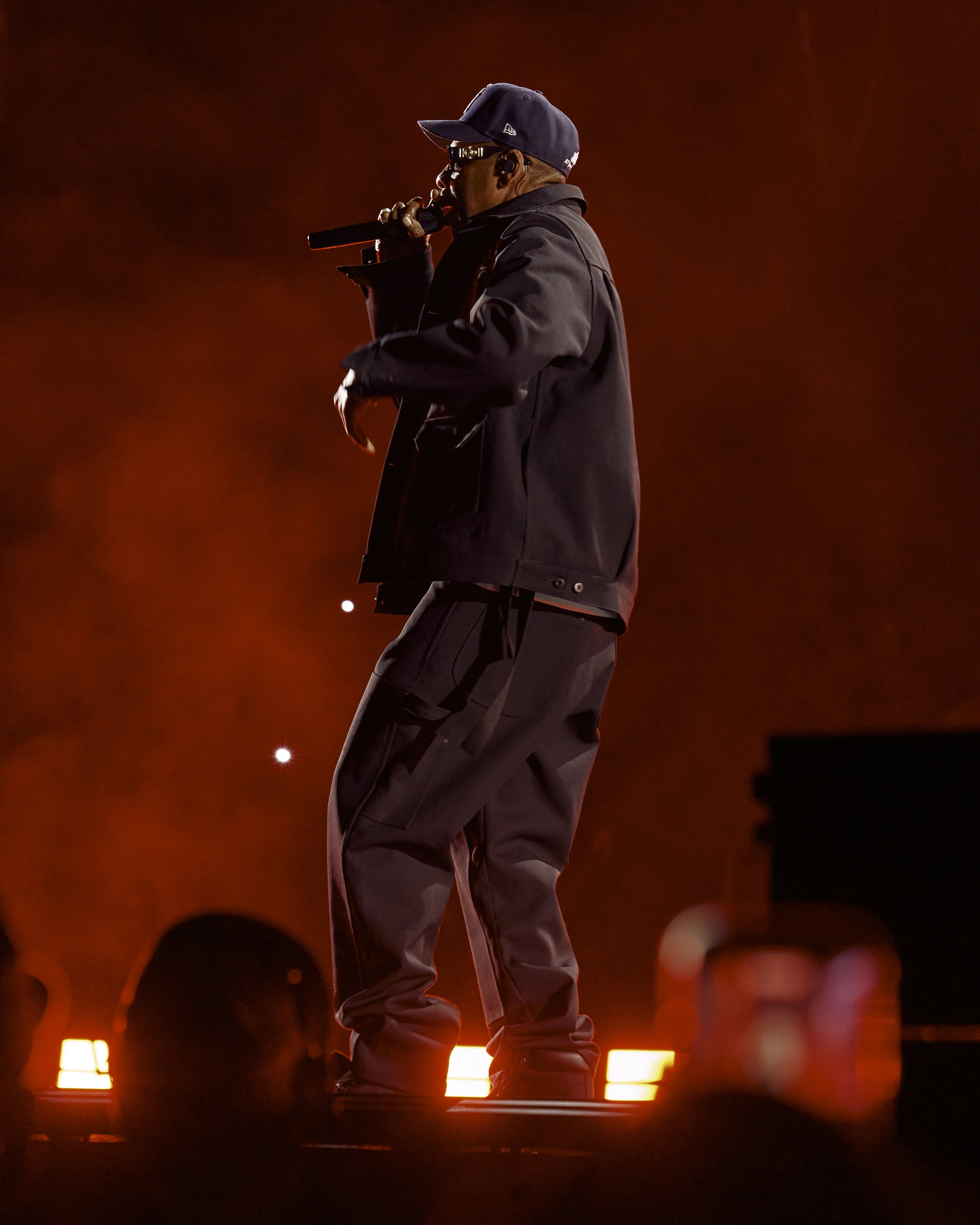
Jay Z will headline the Super Bowl LXI halftime show at SoFi Stadium on February 14, 2027.
It's official.
The announcement has reopened an old argument about his relationship with the NFL.
But the business relationship goes back years.
Roc Nation has worked with the NFL since 2019. The agreement was extended in 2024. And nearly every time Jay Z's name comes up around the league, somebody brings up Colin Kaepernick.
More recently, people criticized his decision to sell an anniversary edition of Reasonable Doubt through Target while the retailer faced boycotts over its diversity policies.
I understand questioning the decisions. Jay Z has made ownership and business part of his public identity.
But I don't need another argument about whether he's a sellout.
I want to know what everybody negotiated, what they gave up, and who gained control.
This reminds me of that Boondocks episode, “A Date with the Booty Warrior.”
A prison riot breaks out. The inmates have leverage. They've got the administration's attention.
Then they form a committee and can't figure out what to demand.
That's the funny part.
They finally have something to negotiate with, but no idea what to negotiate for.
And that's what I see when people organize economic pressure without understanding what they intend to get in return.
2016: Kaepernick Put His Career on the Line
Colin Kaepernick protested racial injustice and police brutality during the 2016 NFL season.
He put his career at risk. After leaving San Francisco, he remained unsigned. He eventually settled a collusion grievance against the league.
Other players protested and faced consequences of their own.
I respect that.
But I kept thinking about the business.
Why wasn't there a coordinated economic response from the players?
During that 2016 protest campaign, there was no league wide work stoppage in which players collectively agreed to miss game checks to force owners into negotiations over a defined set of demands.
I'm not saying Kaepernick should have done more. He made his sacrifice.
I'm questioning the collective strategy.
The players produce the NFL's product. Without them, the league has no games to sell.
That's leverage.
But labor leverage requires organization, shared objectives, financial preparation, and people authorized to negotiate.
Employment protections, a stronger grievance process and independent oversight could be negotiating objectives.
But somebody has to turn those objectives into enforceable commitments and measure the results.
Protest can change public attitudes. It can also impose enormous personal costs.
But getting the public's attention and negotiating a binding economic agreement are different exercises.
2019: Jay Z Made a Business Decision
In August 2019, Roc Nation entered an agreement with the NFL involving live music entertainment strategy and the league's Inspire Change initiative.
Jay Z faced criticism because Kaepernick remained outside the league.
The criticism deserved consideration.
The Roc Nation agreement didn't resolve Kaepernick's dispute. A corporate partnership doesn't establish that the league corrected the issues raised by the protests.
But I also look at what Jay Z's company negotiated.
Roc Nation established a continuing business relationship with an institution that controls one of the country's largest entertainment platforms.
That's not NFL equity.
It doesn't mean Roc Nation owns the Super Bowl.
It's a contractual position inside the entertainment operation.
And there's a meaningful difference between being hired to perform once and establishing an ongoing agreement to provide services.
I'd examine the fees, delivery costs, approval authority and content rights. I'd also want measurable results from the Inspire Change initiatives.
The full current commercial terms aren't public.
I'm not going to confuse the amount of a contract with profit, or company revenue with Jay Z's personal income.
The question isn't how rich Jay Z already is.
The question is what the contract gives Roc Nation, what it costs, and what the company delivers.
That's the standard I'd use whether I was evaluating Jay Z, an entertainment agency, or a company I intended to acquire.
2025: Target Became the Next Fight
In January 2025, Target scaled back several diversity initiatives.
Pastor Jamal Bryant organized the Target Fast, beginning March 5. His coalition demanded action involving Black business spending, deposits in Black banks, relationships with HBCUs, and corporate inclusion policies.
Those were actual demands. That gives us something to examine.
Now, I shopped at Target during the boycott.
I saw Black people shopping. I saw Black employees working.
I was there for a simple reason.
I needed something I couldn't find somewhere else.
That doesn't tell me how many people across America participated in the boycott.
But it made me think about the market.
Where were the alternatives?
We used to have major discount retailers like Caldor, Bradlees, Ames, and Kmart competing for customers.
Those businesses declined or disappeared for different reasons. They weren't all small companies, and they didn't all fail the same way.
But their disappearance changed the shopping options available to consumers.
That's the part I want people thinking about.
You can organize consumers to avoid Target.
But when Target has the merchandise, the price, and the convenient location, where do those consumers go?
A boycott pressures a company. Competition gives its customers another choice.
March 2026: What Did the Boycott Buy?
On March 11, Bryant declared his coalition's boycott over.
He called the campaign a victory.
Other organizers continued protesting, which tells us there wasn't one universally accepted definition of success.
Now let's look at the numbers.
Target's commitment to spend $2 billion with Black businesses existed before the boycott.
Bryant's own movement reported more than $1.9 billion toward that commitment.
That's substantial spending.
But spending under an earlier pledge isn't automatically new economic value created by a boycott.
The campaign also demanded $250 million in deposits in Black banks.
That demand remained unfinished.
The movement pointed to nearly $20 million in Community Development Financial Institution investments dating back to 2020.
Those investments aren't equivalent to $250 million newly deposited in Black owned banks.
Bryant accepted Target's revised corporate inclusion approach and reported progress with HBCU partnerships. Other organizers disagreed about whether the concessions were sufficient.
So here's my question for Bryant.
What new economic value did the negotiations secure?
Separate new contracts and capital from earlier promises, then verify what was delivered.
I'm not interested in counting the pastor's pockets.
I'm interested in the economic accounting of a movement that asked people to change how they spent their money.
The Black church has influence. So do business associations, entrepreneurs, investors, and other community organizations.
That influence should help people build financial literacy, gain access to capital, form businesses, and become owners.
When you ask people to use their economic power, show them what that power produced.
June 2026: Jay Z Made Another Deal
In June, Target released an exclusive 30th anniversary edition of Jay Z's Reasonable Doubt.
Some criticized him for doing business with the retailer.
But Bryant had ended his coalition's campaign months earlier. Other organizers continued theirs.
Target had also maintained commercial sponsorship relationships with Black cultural events, including the Essence Festival.
Different organizations made different decisions about the same corporation.
I'd examine the recording and distribution rights, the economics for each party, and the alternatives to the deal.
Those terms haven't been publicly established.
So I won't invent a profit or assume Jay Z made a brilliant deal because of his reputation.
But I also won't assume that refusing a contract would have created more economic value for anybody else.
A business decision should be evaluated by its terms, alternatives, and results.
Apply that standard to everyone at the table.
The Difference Between Access and Ownership
Roc Nation negotiated commercial access. Equity establishes a different set of rights.
And controlling equity can give an investor the power to direct governance, select directors through the proper process, and influence who runs the company.
When I look at a business, I'm not satisfied knowing who has a relationship with the owner.
The ownership structure tells me who votes, who receives cash flow, and who can replace management.
What would it cost to acquire those rights?
Which brings me back to Target.
I'd Rather Buy Target
Here's the conversation I'd rather have.
Instead of spending every year demanding that Target adopt a particular policy, why aren't we discussing how to compete with Target and ultimately acquire it?
I mean that.
Acquire commercial real estate.
Acquire operating retailers.
Consolidate suppliers and distribution.
Build the purchasing power, locations, inventory systems, and customer relationships needed to compete.
Give people somewhere else to shop.
Then organize the capital to acquire the company itself.
Not buy a few shares and pretend to run the business.
Acquire controlling ownership.
That's what I mean when I say I'd rather pay them to leave.
I'm not interested in spending decades negotiating for permission to participate in somebody else's company.
Because buying the business changes the conversation from requesting decisions to having the authority to make them.
What Would It Actually Cost to Acquire Target?
Let's use real numbers.
Target's shares closed at $152.76 on Friday, October 23, 2026.
Its August 1 financial statements reported 454,291,461 shares outstanding.
Using that share count and closing price, Target's equity market value was approximately $69.4 billion.
At the same quoted price, 51% of its outstanding shares represented roughly $35.4 billion.
But that isn't a guaranteed takeover price.
Shareholders have to be willing to sell. A serious control proposal has to account for the price necessary to secure the transaction.
Let's model an illustrative 25% premium.
That puts the offer price at $190.95 per share.
Acquiring 51% would require approximately $44.2 billion in share purchase consideration.
Acquiring 100% would require approximately $86.75 billion.
Those are calculations, not actual offers.
And that's before resolving the financing and transaction structure.
As of August 1, Target reported approximately $15.36 billion in borrowings and $5.41 billion in cash.
That debt matters. Some obligations could remain in place, while others might need refinancing depending on the agreements and change of control provisions.
Target generated approximately $6.56 billion in operating cash flow during fiscal 2025 and spent $3.73 billion on property and equipment.
You can't treat all operating cash flow as money available to service acquisition debt.
The business still needs inventory, property investment, working capital, and the ability to meet its obligations.
Now we're underwriting an acquisition.
How much investor equity is required, and what borrowing can the cash flow support?
Who will provide the financing?
And how will the acquiring group divide ownership, voting control, director appointments and financial returns?
A lead investor doesn't need to personally supply every dollar of the purchase price.
But the acquiring group must establish sufficient capital, financing commitments, transaction approvals, and governance rights to complete the acquisition.
That's what I want people learning: how to form an investor group, value assets, finance an acquisition, and protect ownership after closing.
Not just how to save money.
How to organize money into ownership.
Know What You're Demanding
Kaepernick protested and accepted personal consequences.
Bryant organized consumers around corporate demands.
Jay Z negotiated a continuing commercial relationship with the NFL.
Each used a different form of leverage. The standard is what it accomplished and who controls the result.
Because financial power isn't only about how much money people spend.
It's also about who owns the businesses receiving that money.
A boycott can be a negotiating tool.
A commercial contract can create income and rights.
A competing company can capture customers.
And an acquisition can transfer controlling ownership.
I want Black people understanding all of those choices and how the numbers work.
The goal isn't simply to get a corporation's attention.
It's to build the knowledge, relationships, and capital necessary to participate as owners.
A boycott asks management to change. An acquisition changes who management answers to.
Jay Moxie | Moxie Talk
Sources and photograph credits
- NFL official announcement
Official performance confirmation. Added October 27, 2026.
- Roc Nation and the NFL, 2019
Original league announcement of the entertainment and social justice partnership.
- NFLPA, February 15, 2019
The players association confirms settlement of the Kaepernick and Reid collusion cases. Terms were confidential.
- Puck, October 20, 2026
Earlier reporting on the booking and the 2024 renewal, retained as background. The official NFL announcement is now linked above. Private commercial terms and profit remain unestablished.
- Target pledge, April 7, 2021
Original commitment predates the 2025 boycott.
- Target Fast campaign report
Campaign account of its demands, earlier commitments, CDFI investments and outstanding work. The campaign uses allocated for the $1.9 billion figure.
- Jamal Bryant movement report
Reports March 5, 2025 launch and March 11, 2026 conclusion. Uses spent for the $1.9 billion figure. The column attributes the figure without presenting independently reconciled cash payments.
- CNN transcript, June 27, 2026
Includes Target’s statement confirming the Reasonable Doubt partnership and reports the criticism. Private transaction economics are not disclosed.
- Target, ESSENCE Festival 2026
Corporate account of its festival relationship.
- Target share filing
454,291,461 shares outstanding on August 1, 2026. This historical count is the model input, not a statement of the exact October 23 count.
- Target second quarter 2026 balance sheet
August 1 cash $5.411 billion. Borrowings $1.136 billion current plus $14.221 billion noncurrent, totaling $15.357 billion.
- Target fiscal 2025 results
Operating cash flow $6.562 billion. Property and equipment spending $3.727 billion. Their $2.835 billion difference is not acquisition debt capacity.
- TGT historical stock price
Friday, October 23, 2026 close: $152.76. Calculations use the exact reported share count and unrounded inputs. A 25% premium gives $190.95 per share, $44.240946784 billion for 51%, and $86.746954478 billion for 100%.
Hero and lead cover: separate photographs from the official Jay Z 30 Los Angeles night two press gallery, October 24, 2026. Photo credit: Roc Nation. Official full resolution press photographs. Each image has one editorial placement. Display crops preserve the original photograph.
The conversation
Does working with the NFL create more power to change it than walking away?
Loading the conversation…