
Opinion / Media, Intellectual Property & Ownership
Joe Budden Raised the Price of the Brick. Now the Clippers Have to Decide if They're in Business.
JBN owns the inventory. The clippers own a decision. Inside the licensing economics, the concentration risk, and the business worth building next.
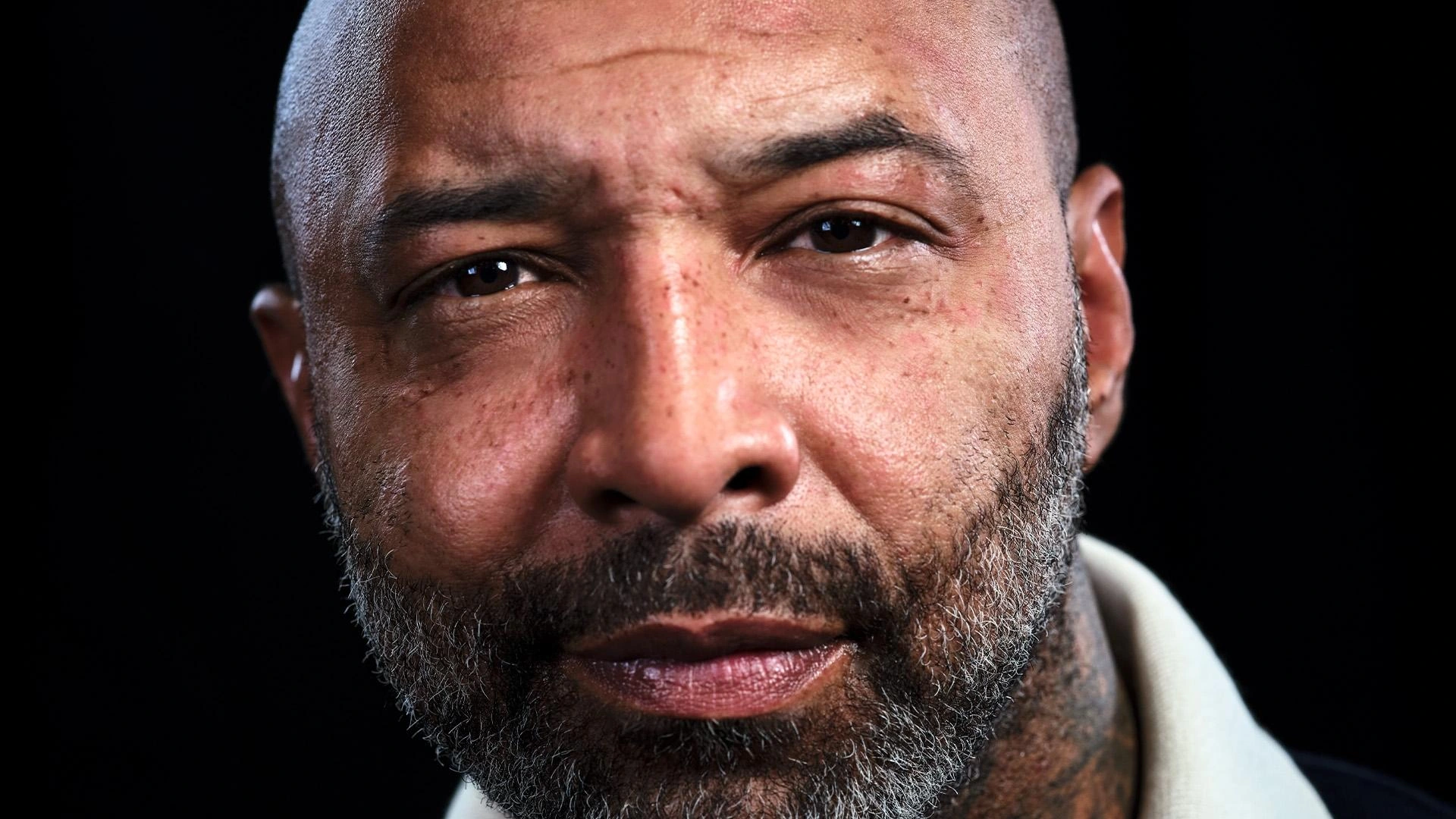
Joe Budden raised the price of the brick, and now some of the people making money from his product have a problem with it.
I find that interesting.
Joe Budden and Ian Schwartzman have spent years developing the Joe Budden Network. They've built an independent media business around their audience, personalities, content, subscription relationships, and intellectual property.
Meanwhile, other people have built income streams by taking pieces of that content, distributing them across the internet, and monetizing the attention.
Some of those operators are legitimate media professionals.
Others have been taking clips, adding provocative captions, posting repeatedly, and creating content with little consideration for the original brand.
Now JBN has released a seven tier licensing structure, ranging from $500 to more than $7,500 per month.
And some people are responding as though the network has taken away something they owned.
But that's the point.
They never owned the underlying content.
I've said for years that something for nothing never works.
You can build a business with limited money. You can find opportunity where other people aren't looking.
But if the foundation of your business is unrestricted access to somebody else's property, eventually the owner gets a say.
Joe and Ian have made their move.
The question is whether the clippers have built businesses capable of adapting.
Joe Raised the Price of the Brick
Anybody familiar with The Wire remembers Marlo taking control of the co op.
He understood what happens when control of supply changes hands.
The person controlling the product gains leverage over its distribution.
That's the principle I see in the JBN announcement.
Joe raised the price of the brick.
But this isn't a fictional street economy. It's a legitimate media licensing business.
The network controls valuable intellectual property, subject to the rights and agreements governing its content.
A clipper seeking permission to commercially distribute that content is acquiring access to an asset.
That access has commercial value.
The owner can establish the price and conditions.
The buyer must decide whether the transaction makes sense.
That's how licensing works.
And it's how I would evaluate this situation if I were advising either side.
The Pricing Structure Tells the Story
The Joe Budden Network released seven licensing tiers.
| Tier | Monthly views | Posts per month | Monthly license |
|---|---|---|---|
| Clipper | Under 100K | Up to 5 | $500 |
| Creator+ | 100K–500K | Up to 10 | $1,000 |
| Partner | 500K–1M | Up to 15 | $1,500 |
| Premier | 1M–2.5M | Up to 30 | $2,500 |
| Premier Plus | 2.5M–5M | High volume | $3,500 |
| Enterprise | 5M–10M | High volume | $5,000 |
| Enterprise+ | Over 10M | Custom | $7,500+ |
The first four tiers have one channel and optional revenue sharing.
Starting with Premier Plus, the network offers customized channel arrangements and requires revenue sharing, with the actual split still to be determined.
Patreon eligibility begins with Premier.
These differences are important.
This isn't one license offered at seven arbitrary prices.
It's a system for controlling commercial access based on the scale of an operator's distribution business.
And I believe the pricing is intended to influence what kind of operators participate.
The $500 Tier Controls the Slop
At the entry level, a clipper pays $500 monthly and receives permission to publish up to five posts.
Five.
That doesn't support an unlimited strategy of grabbing every controversial statement, putting captions on it, and flooding social media.
If an operator wants to build a business within those restrictions, they need to become selective.
Choose better moments.
Produce better edits.
Understand the audience.
Make each post count.
That's a different discipline from posting everything and hoping something takes off.
And from the network's perspective, it creates more control over how licensed content is represented.
A misleading clip can change the context of a conversation.
A sensational headline can make a network personality appear to say something they didn't mean.
The clipper may earn attention, while the network carries the reputational consequences.
We don't know exactly how much low quality clipping has affected JBN's reputation or revenue.
But it's reasonable for an owner to establish standards for commercial use of its content.
Posting limits alone won't eliminate content slop. The network also needs clear rules and enforcement.
Still, this pricing structure establishes a different relationship.
You're not entitled to unlimited inventory simply because you know how to edit a video.
The Opportunity Is in the Middle
I believe the most commercially interesting tiers are $2,500 and $3,500.
The Premier license costs $2,500 monthly and allows up to 30 posts on one channel, with optional revenue sharing and Patreon eligibility.
Premier Plus costs $3,500 and allows high volume posting with customized channels, but introduces mandatory revenue sharing.
That's a meaningful change.
At $2,500, the operator has a defined posting allowance and a relatively predictable licensing expense.
At $3,500, the relationship becomes more involved. Both parties can participate in revenue generated under the licensing agreement.
In my view, Premier could be attractive to a disciplined independent operator who already has a substantial audience and knows how to monetize it.
Premier Plus could appeal to an established media business capable of supporting broader distribution and sharing revenue.
Neither tier guarantees profit.
The quality of the operator's business determines that.
And the monthly view requirements matter. A new clipper cannot simply assume they qualify for a larger tier because its features look attractive.
Let's Evaluate the $2,500 License Like an Acquisition
Suppose I represent a clipping company considering the Premier tier.
The license costs $2,500 a month.
If the operator uses all 30 permitted posts, that averages approximately $83 in licensing expense per post.
Now assume the company collects $6,000 in monthly revenue attributable to those licensed clips.
Here's one hypothetical operating model.
| Monthly performance | Amount |
|---|---|
| Revenue | $6,000 |
| JBN license | -$2,500 |
| Editing and production | -$800 |
| Software and operating expenses | -$200 |
| Operating contribution | $2,500 |
That's $2,500 before taxes, owner compensation not already included, and any additional expenses.
It isn't a guaranteed profit.
And it only works if the operator actually earns enough from the rights being licensed.
A million views doesn't automatically mean a million monetized views.
The relevant numbers are the revenues, costs, and contractual obligations.
If that operator earns only $2,000 monthly, the license creates a loss before other costs.
If the operator produces $10,000 in collectible revenue with similar costs, the economics look substantially better.
That's underwriting.
I don't buy a business because its product is popular.
I buy because the numbers support the price.
A clipper should evaluate licensing rights the same way.
I Don't Think the $7,500 Tier Is Meant for Everybody
The Enterprise+ tier starts at $7,500 per month.
That represents at least $90,000 annually before required revenue sharing.
It's associated with operators exceeding 10 million monthly views and includes customized commercial arrangements.
I suspect Joe and Ian understand that this isn't an entry level offering.
It may be a way of limiting broad commercial access to substantial media operators who can afford and justify it.
It also creates a pricing anchor that makes the middle tiers appear more accessible.
But I wouldn't assume the highest tier is designed to lose money or that nobody will purchase it.
A large operation may have advertising, sponsorships, established audiences, and other revenue streams that justify the expense.
The point is that the network has established different prices for different levels of access.
That's ordinary commercial segmentation.
And the owner has the right to determine what type of partnership it wants to offer.
We Don't Know What Clipping Has Actually Cost Joe
Let's be clear about one thing.
We don't know how much revenue JBN has lost because independent clippers distributed its content.
Some clips may have diverted monetized views or paid subscriptions.
Others may have brought new listeners who eventually became customers.
Both outcomes are possible.
Without the network's analytics, it's impossible to calculate the net effect responsibly.
And I wouldn't make up financial losses to justify an owner's business decision.
But controlling intellectual property is valuable even before somebody proves a specific amount of lost income.
Rights determine who can distribute, modify, monetize, and commercially represent the content.
That's part of owning a media business.
And independent ownership has been central to what Joe and Ian have built.
The Clippers Have a Bigger Problem Than Licensing Fees
Let's say you're running a clipping page generating $5,000 or $10,000 a month.
You've built an audience by posting JBN content.
The money is coming in.
But what do you actually own?
You may own your brand, business processes, editing systems, and certain customer relationships.
You don't automatically own Joe's original recordings.
And if the license changes, you could lose access to the product generating most of your revenue.
That's supplier concentration risk.
If I were acquiring your clipping business, I'd investigate that before I ever discussed a purchase price.
I'd examine how much of your revenue depends on one network.
I'd review your licensing agreement.
I'd want to know whether it renews, whether it can be terminated, whether it can be assigned to another owner, and what happens to your existing content when the relationship ends.
A clipping company generating substantial revenue without dependable rights to its main inventory may have less enterprise value than its owner thinks.
Because cash flow is only one part of valuation.
Control and durability matter, too.
Here's My Solution for the Clippers
JBN has made its move.
If I owned a clipping company, this is how I'd respond.
First, establish my own identity.
I'd build a recognizable media brand with its own website, audience relationships, services, and editorial standards.
I wouldn't make my entire identity a copy of the podcast I'm clipping.
Second, choose the license my numbers support.
I'd review the actual eligibility requirements, permitted posts, monetization rights, fees, and revenue sharing terms.
If my business qualified for Premier and its economics made sense, I'd evaluate that tier.
If I couldn't justify the cost, I'd choose the appropriate smaller tier rather than operate at a loss.
If none of the tiers worked, I'd move on.
Third, diversify my inventory.
I'd develop relationships with additional podcasters, independent creators, athletes, and business owners.
I'd obtain commercial rights where needed.
And I'd reduce my dependence on one network controlling most of my revenue.
Fourth, sell media services directly to content owners.
A clipper who understands editing, hooks, packaging, and social distribution has marketable skills.
Instead of earning income exclusively from republishing another person's content, that operator can offer monthly production and distribution services.
Three clients paying $1,500 monthly generate $4,500 in contracted revenue before expenses.
Five clients generate $7,500.
Those are illustrative sales targets, not guaranteed earnings.
But the important difference is the business relationship.
Now you're being hired to produce something valuable for the owner.
Fifth, create original intellectual property.
Build your own commentary, interviews, formats, and original programming.
Give the audience a reason to follow your company beyond clips taken from another network.
You can still operate as a licensed JBN distribution partner.
But you also begin creating content you control and may eventually license to others.
That's how I'd build a media business with lasting value.
If Joe and Ian Were My Clients
I'd support the licensing program.
But I'd measure success by more than licensing revenue.
I'd want to know which tiers attract profitable, professional operators.
Which partners generate measurable audience growth?
Which produce high quality content that strengthens the brand?
Which introduce new subscription customers or sponsorship opportunities?
I'd identify the best operators and explore deeper commercial partnerships.
Some could become preferred distributors.
Some could participate in sponsorship campaigns.
Others might develop into production partners or acquisition targets.
The licensing program could become a pipeline for finding businesses that understand the network and know how to grow its reach.
That has potential enterprise value beyond collecting monthly fees.
And because the network controls the underlying intellectual property, it can establish standards for how that commercial ecosystem develops.
Something for Nothing Never Works
Here's what some people are missing.
Joe Budden didn't create the clippers' business problem.
He exposed it.
If your operation depended entirely on cheap or unrestricted access to somebody else's product, you were always exposed to the owner changing the terms.
That doesn't mean clipping is an illegitimate business.
It means clipping needs the same discipline as any other business.
Licensing.
Rights.
Contracts.
Supplier relationships.
Production costs.
Profit margins.
Customer acquisition.
Original assets.
Those aren't unnecessary complications.
They're the foundation of a business that can survive.
And instead of treating Joe like some giant corporate machine attacking small creators, I'd examine the independent media business he and Ian actually built.
That doesn't mean I would agree with every price or every licensing restriction.
It means I understand that the person who created the asset gets to negotiate the terms for its commercial use.
And the person acquiring those rights has to negotiate from their own economics.
My Decision
If I were advising Joe and Ian, I'd maintain the licensing structure, enforce brand standards, and develop the strongest operators into genuine distribution partners.
If I were advising a clipping business, I'd evaluate the available tiers, protect my margins, diversify my suppliers, and start creating intellectual property of my own.
I wouldn't pay $7,500 because Joe's audience is popular.
And I wouldn't demand access for nothing because I used to get it more cheaply.
I'd buy the rights that made financial sense.
Then I'd build a business around what I could actually control.
Joe raised the price of the brick.
The market has changed.
JBN made its move. Are you still in business?
Jay Moxie | Moxie Talk
The conversation
Could you build a profitable clipping business at Joe Budden’s licensing prices?
Loading the conversation…