
Opinion / Sports, Acquisitions & Ownership
KAT's $61 Million Decision: If I Represented Towns or Dolan, Here's the Deal I'd Make
A championship changes the conversation. It does not change the discipline of valuing an asset. Jay Moxie examines the deal from both sides of the table.
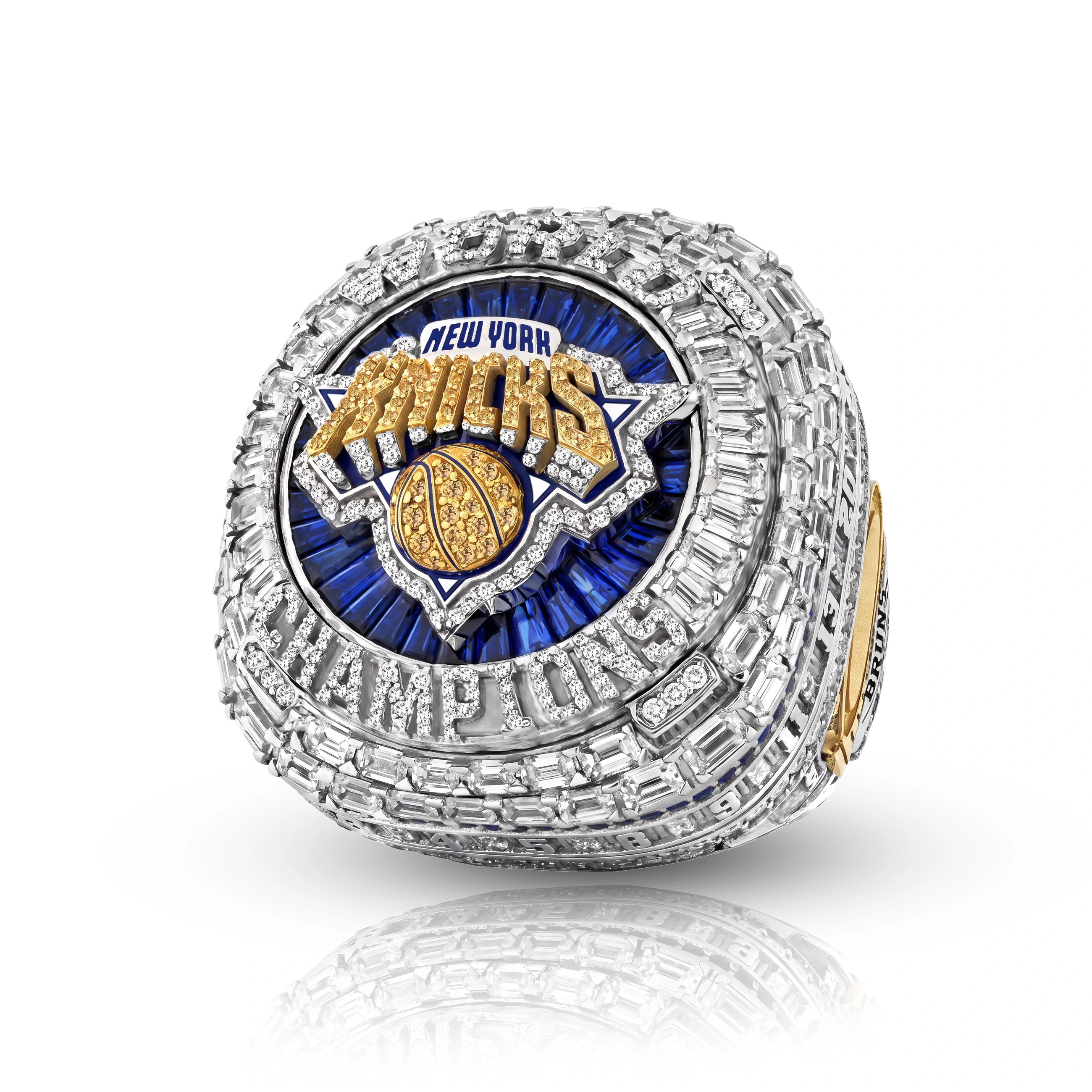
I've been a Knicks fan my entire life.
Before we got cable, my pops and I listened to Knicks basketball on the radio. I grew up rocking Ewings and watching my favorites Starks and Mason (Long Live). That team gave us so many reasons to believe and just as many reasons to be disappointed.
I remember the heartbreak of the 1994 Finals and the O.J. Simpson chase. In 1999, we made another run to the Finals, but with Patrick Ewing injured, I didn't believe we had a realistic chance against San Antonio. We were just happy to be there.
Then came Melo, Linsanity, and years of waiting for the Knicks to become contenders again.
On Tuesday, October 20, 2026, Madison Square Garden finally celebrated another NBA championship.
The NBA Cup banner had gone up earlier in the day. Mike Breen hosted the evening's celebration. Walt "Clyde" Frazier, who helped bring New York its last championship in 1973, presented the players with their rings.
Then the 2025–26 World Champions banner rose into the rafters.
Watching it, I thought about my pops and all those games we experienced together. I wondered what he would have thought seeing the Knicks finally win another championship.
I imagine a lot of longtime fans were having similar thoughts. Fifty three years is a long time.
Those games on the radio were good times. Life is good for me today, too. I appreciate both for what they were.
The championship brought together generations of Knicks fans across New York, Big Jersey, and around the world. And seeing Karl Anthony Towns, another kid from Big Jersey, help deliver it made the moment even more meaningful.
But the celebration and the business are two different things.
If Karl Anthony Towns were my client, I'd protect his earning power and contractual leverage.
If James Dolan were my client, I'd protect the franchise's capital, financial flexibility, and ability to win another championship.
I can appreciate the history without allowing it to determine the price of the next contract.
Because what something meant to you yesterday doesn't establish what it's worth tomorrow.
Never Pay Yesterday's Market Price
One principle I apply to acquisitions is that a seller's previous valuation doesn't establish today's purchase price.
You might have purchased a property in a stronger market. You might have built a business when financing was cheaper. You might have negotiated a contract when buyers were paying premiums.
That doesn't obligate the next buyer to pay the same price.
The seller must evaluate today's market and decide whether to transact or wait.
The buyer must underwrite expected future value.
And just because you love an asset, want it badly, or can afford it doesn't mean you should overpay.
That principle is central to KAT's contract situation, even though an NBA employment agreement has rights and restrictions that differ from an ordinary business acquisition.
In 2022, Towns signed a four year supermax extension with Minnesota, initially reported at approximately $224 million.
The NBA salary cap was approximately $123.7 million when he signed.
For 2026–27, the cap is $164.961 million.
That's a 33.4% increase.
The league's compensation environment has grown considerably.
But higher league revenue doesn't automatically mean every player deserves the maximum.
The Knicks aren't buying KAT's past accomplishments.
They're committing capital against the production they expect from him over the coming seasons.
The question is what those future years are worth in today's market.
Jalen Duren Gives Us a Current Market Comparable
On October 2, Detroit agreed to pay 22 year old center Jalen Duren $200 million over five years.
That's $40 million annually.
Duren averaged 19.5 points and 10.5 rebounds last season while shooting approximately 65% from the field. He earned his first All Star selection and All NBA Third Team recognition.
Now compare him with KAT.
| Category | KAT | Jalen Duren |
|---|---|---|
| Age | 30 | 22 |
| 2025–26 points per game | 20.1 | 19.5 |
| Rebounds per game | 11.9 | 10.5 |
| Offensive strengths | Shooting, spacing, versatile scoring | Interior finishing, efficiency, rebounding |
| Career All Star selections | 6 | 1 |
| NBA championships | 1 | 0 |
| Annual contract comparison | $50M reported offer | $40M signed contract |
Detroit is investing in a young center with significant potential upside.
New York is negotiating compensation for an established offensive star who helped deliver a championship.
Those are different investments.
Duren is eight years younger, with more of his prime potentially ahead of him.
KAT has a more developed offensive skill set, particularly his ability to stretch the floor and create space for Jalen Brunson.
The Knicks' reported $200 million offer over four years averages $50 million annually, a 25% premium over Duren's agreement.
That's not necessarily an unreasonable starting point.
But it isn't automatically KAT's market value, either.
I'd examine his shooting, rebounding, durability, age, championship experience, and the cost of replacing his production.
Then I'd determine what premium those characteristics justify.
Duren's five year deal is a useful comparable, but contract guarantees, starting salaries, age, and timing must also be considered. His $40 million average doesn't establish the price of KAT's next four years.
You don't acquire yesterday's statistics.
You acquire tomorrow's performance.
The Second Apron Changes the Entire Transaction
The NBA's official 2026–27 financial thresholds are:
| Category | Amount |
|---|---|
| Salary cap | $164.961M |
| Luxury tax | $200.428M |
| First apron | $209.015M |
| Second apron | $221.686M |
The second apron isn't simply another tax.
It restricts certain trades, roster building mechanisms, and future flexibility.
Dolan has indicated that he doesn't want the Knicks operating above that threshold.
I understand why.
New York has major contractual obligations to Brunson, OG Anunoby, Mikal Bridges, Josh Hart, and the rest of the roster.
Their future contract decisions could materially affect the organization's payroll.
A $5 million difference in one player's salary may have consequences far beyond $5 million if it determines whether the team can complete another important transaction.
That's opportunity cost.
The fact that Dolan can afford KAT's contract doesn't automatically make the contract a good investment.
The issue is how the spending affects the entire operation.
KAT Has a $61 Million Decision
KAT is earning approximately $57.1 million this season.
He also holds a player option worth approximately $61 million for 2027–28.
That's significant contractual leverage.
The Knicks reportedly offered a four year extension worth approximately $200 million.
Towns was eligible for a maximum extension reaching approximately $276 million.
The headline difference is $76 million.
But those figures alone don't explain the actual negotiation.
October 19 passed without an extension agreement.
That deadline mattered because retaining his 2027–28 player option limits which extension structures can be negotiated during the season.
It did not automatically eliminate the option itself.
As of this writing, I have not independently verified a formal decision to exercise or decline it.
That's why I wouldn't structure this negotiation around an assumption that the option has disappeared.
I'd evaluate what the player controls, what the organization needs, and which contractual pathways remain available.
If KAT Were My Client
I'd begin with the value of his existing contract.
The option represents approximately $61 million in potential compensation for 2027–28.
I wouldn't recommend surrendering that protection simply to make the Knicks' payroll easier to manage.
I'd compare available guarantees, future market conditions, age, performance risk, and the opportunities that might exist if negotiations continue.
KAT has indicated a willingness to accept less than the maximum to help preserve the championship roster.
That's useful negotiating flexibility.
But flexibility isn't the same as surrender.
My goal would be to maximize the guaranteed compensation available under an agreement that respects both his current rights and expected future value.
If Dolan Were My Client
I'd start with the complete payroll.
Not just KAT's salary.
I'd model every guaranteed contract, potential extension, minimum roster expense, future apron threshold, and realistic replacement alternative over the next five seasons.
Then I'd determine how much the organization can sustainably commit to Towns.
If the payroll pressure is greatest in 2028–29, I'd negotiate the contract around that year.
If the problem develops later, I'd address that period.
I'd evaluate the cost of retaining KAT against the cost of replacing him.
And I'd establish the highest price that makes economic sense.
I wouldn't pay more because public sentiment makes the negotiation uncomfortable.
And I wouldn't offer less without a financial explanation.
That's how I'd underwrite the investment.
My Solution: Protect the Option, Negotiate the Future
Here's the structure I'd explore.
Rather than asking KAT to immediately surrender his $61 million player option, I'd preserve that value and negotiate additional guarantees through an eligible extension window.
One financial model worth testing is a four year, $180 million extension beginning in 2028–29.
The combined commitment would be:
| Contract component | Value |
|---|---|
| 2027–28 player option | $61M |
| Four year extension beginning 2028–29 | $180M |
| Combined five season commitment | $241M |
That's five seasons of compensation, not a four year $241 million agreement.
The additional four years average $45 million annually.
The structure creates an opportunity for KAT to preserve the value of his existing option and obtain further guaranteed compensation.
It also gives the Knicks a potential route to reducing the annual cap cost of retaining him after 2027–28.
But $180 million doesn't have to be the final number.
I'd establish the following negotiating range.
| Additional four year guarantees | Annual average | Five season total including option |
|---|---|---|
| $180M | $45M | $241M |
| $190M | $47.5M | $251M |
| $200M | $50M | $261M |
These are valuation scenarios, not three confirmed executable contract schedules. Actual terms must comply with the NBA's collective bargaining agreement.
My opening position would be $180 million in additional guarantees, with authority to negotiate toward $190 million if the payroll supports it.
I wouldn't automatically offer $200 million.
The Knicks' previous offer and the proposed option preserving extension aren't identical transactions.
The timing and total number of seasons covered matter.
And that's where the actual negotiation takes place.
Why I'd Favor This Structure
KAT gets to preserve valuable contractual leverage while negotiating future security.
The Knicks get an opportunity to avoid carrying his approximately $61 million annual compensation level indefinitely.
And Dolan can model the future cap impact rather than simply negotiate against a maximum contract figure.
If the financial projections support the agreement, I'd recommend making the deal when permitted.
If they don't, I'd adjust the offer.
And if the parties still cannot agree, waiting may be better than forcing a transaction that doesn't create value.
That's not disrespecting the player.
That's disciplined business.
The Fans Are Part of the Business
Banner Night reminded everyone how much value generations of loyalty have created.
The Knicks aren't just a collection of contracts.
They're a business with history, community, global recognition, and customers who have invested money and emotion for decades.
I've been one of those customers all my life.
But the organization shouldn't allow the emotions of one championship to dictate every future financial decision.
The responsibility is to build a competitive team capable of sustaining that success.
I want KAT fairly compensated.
I want Brunson and the rest of the roster positioned to compete.
And I want the Knicks to preserve the flexibility to improve when opportunities appear.
The goal isn't merely to raise a banner.
It's to build an organization capable of raising another.
My Decision
If I represented KAT, I'd protect the option while evaluating a substantial extension through the appropriate contractual window.
If I represented Dolan, I'd open with $180 million in new guarantees and assess a negotiating range up to $190 million against the organization's payroll projections.
I'd be prepared to adjust based on the actual economics.
Neither side should confuse historical compensation with future value.
A seller must understand the current market.
A buyer must underwrite expected future returns.
And just because you can afford an asset doesn't mean you should overpay for it.
Tuesday night gave Knicks fans something many of us weren't sure we'd ever see.
I'm grateful I got to experience it.
But the celebration is over, and the business continues.
Pay the player. Protect the business. Preserve the championship window.
Jay Moxie | Moxie Talk
The conversation
If you represented Towns or Dolan, what deal would you actually put on the table?
Loading the conversation…