
Opinion / Acquisitions, Ownership & Capital
Rick Ross, Wingstop and the Business of Owning Without Being Known
Everybody wants to count Ross's restaurants. I'm looking at who owns the business, who controls the assets, and who gets paid.
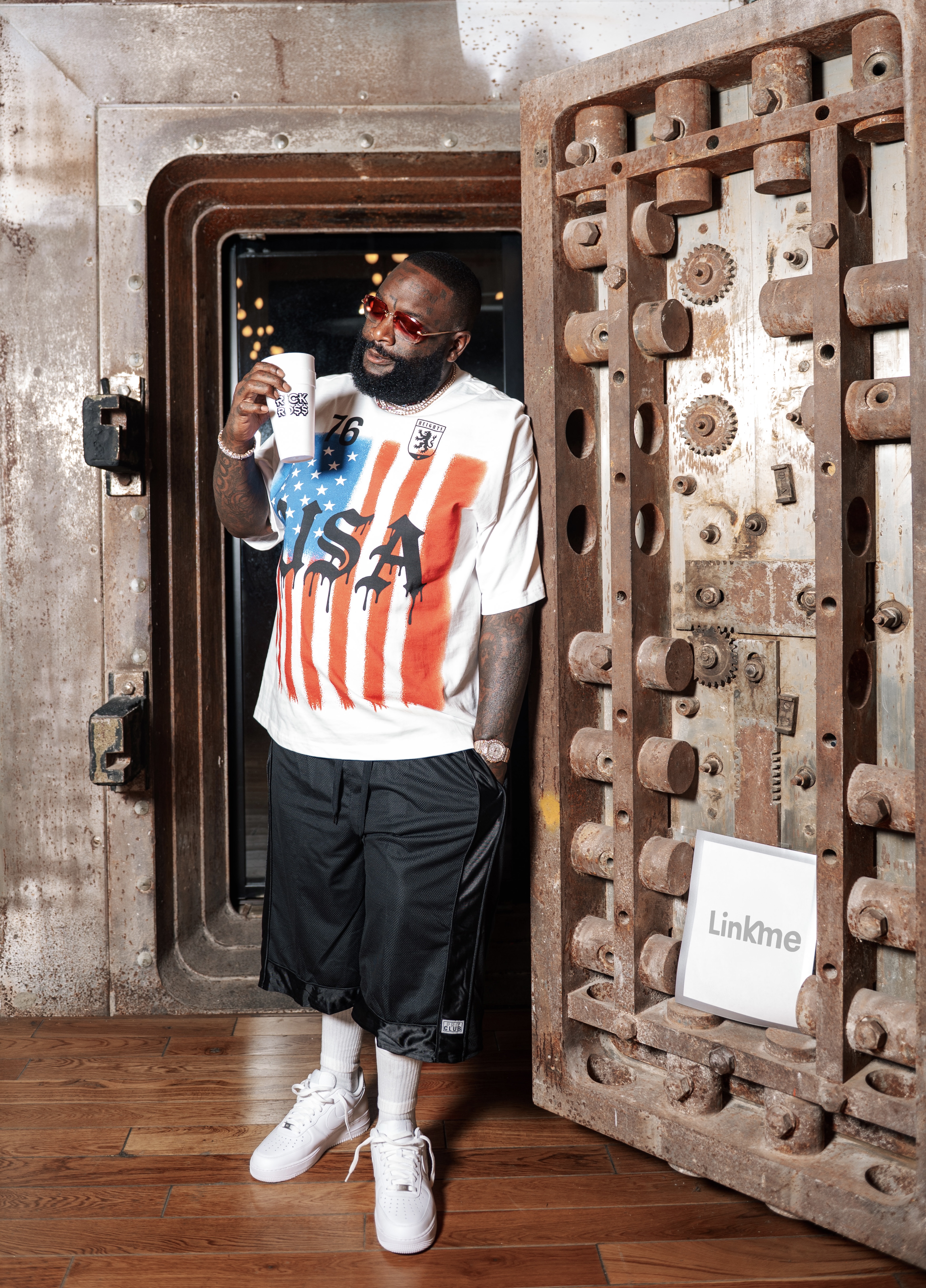
Rick Ross had Wingstops. Now everybody wants to know where they went.
Investor Eric Jackson says he reviewed Wingstop's state franchise filings connected to the Boss Wings companies associated with Ross's family. According to Jackson, those filings listed 21 open restaurants at the end of 2016 and one remaining in the tracked operation at the end of 2025.
That's Jackson's account of those filings, not a complete audit of Ross's holdings.
50 Cent had jokes. Ross said he shifted his focus toward stocks.
And everybody started counting a man's money.
Ross has spent years promoting an image of wealth. When you build your public identity around that image, people are going to question it.
I get that.
But there's a difference between questioning somebody's story and knowing their finances.
The public reporting doesn't establish the complete ownership interests, original investments, distributions, outstanding debt, or proceeds from the restaurants that changed operators.
Twenty one restaurants doesn't prove somebody is rich.
One restaurant doesn't prove somebody is broke.
You can't calculate wealth by counting storefronts.
The internet sees a controversy.
I see an opportunity to discuss something more valuable.
How do you acquire businesses, control assets, collect income, and maintain privacy without putting your personal name on every operation?
And once you understand ownership, which investment makes more sense: Wingstop stock, a Wingstop franchise, or your own chicken restaurant?
Let's get into the business.
Wingstop Shows You the Difference
Wingstop's corporate model demonstrates the distinction.
At the end of 2025, Wingstop reported 3,056 restaurants worldwide.
Of those, 2,999 were franchised.
Only 57 were operated by the company.
Approximately 98% of the system consisted of franchised restaurants.
Think about that.
The corporation controls the brand and franchising system.
Independent franchise operators finance and run most of the restaurants.
Public shareholders own equity in the corporation above that system.
Three different ownership positions.
Wingstop reported approximately $5.34 billion in systemwide restaurant sales for fiscal 2025.
Its corporate revenue was approximately $696.9 million, including advertising fund revenue.
That's not missing money.
The $5.34 billion represents sales across the restaurant system. Wingstop's corporate revenue reflects the revenue it recognizes from its own operations, royalties, fees, and other activities.
The franchise operator collects restaurant sales, pays operating expenses, and owes fees under its franchise agreement.
The franchisor earns revenue from its contractual relationship with operators. The national advertising contribution funds the advertising program. It is not the same thing as royalty profit.
The shareholder participates in the parent corporation's financial performance.
Same brand. Different rights. Different responsibilities. Different money.
That's the business model.
One brand. Different owners. Different revenue.
Wingstop fiscal 2025. Select the restaurant system, the accounting measures or the contractual payments.
3,056 restaurants worldwide at December 27, 2025. Percentages are calculated from restaurant counts.
Sales across franchised and company operated restaurants. Exact reported amount: $5,343,089,000.
Consolidated revenue, including advertising fund revenue. Exact reported amount: $696,853,000.
These measures overlap. Their difference is not corporate profit or cash distributed to operators.
Restaurant revenue supports several different obligations. Royalties and advertising contributions are separate payments. Shareholder returns are a further corporate decision.
So Which One Would I Buy?
Ross says he's focusing on stocks.
I'm not a stock guy.
I prefer acquiring businesses where I can negotiate the purchase, influence operations, control important decisions, and create value directly.
But preference doesn't replace underwriting.
Let's compare the investments.
Wingstop Stock
Wingstop shares closed at $119.54 on October 23, 2026.
At that price, I can buy equity in the publicly traded parent corporation without opening a restaurant.
I get exposure to the company's financial performance and potential dividends.
I can generally sell shares through the stock market.
But I don't control the restaurants, management, menu, franchise agreements, or corporate capital allocation simply because I own a small number of shares.
My investment depends on the company's performance and what investors are willing to pay for its equity.
That's a different ownership position from acquiring and operating a business.
And the stock's price matters.
A great company can still be a poor investment when the acquisition price is too high.
I don't buy yesterday's valuation because the company has a recognizable name.
I evaluate what I'm paying against what the business can produce from here.
A Wingstop Franchise
Wingstop reported approximately $2 million in average annual domestic restaurant sales for 2025.
Its reported average initial investment was approximately $580,000, excluding real estate purchase or lease costs and preopening expenses. That is not an all in acquisition price for an existing restaurant.
In its 2025 annual report, Wingstop describes standard domestic terms that include a 6% royalty and a 5.5% national advertising contribution on gross sales net of discounts.
If $2 million of annual restaurant sales is subject to both fees, those two charges total $230,000.
That's before food, labor, rent, utilities, insurance, and other operating costs.
And sales are not profit.
Wingstop also states that it targets an unlevered cash on cash return of approximately 70% or greater by a new restaurant's second year.
That's the company's target, not a guaranteed result for every operator.
I want to see actual operating statements and the franchise disclosure document before relying on that number.
A Wingstop franchise brings brand recognition, established products, purchasing relationships, marketing, technology, and an operating system.
But those benefits come with fees and contractual obligations.
The standard franchise agreement generally begins with a ten year term, and important decisions remain subject to franchise requirements.
I'm acquiring the right to operate under Wingstop's brand.
I'm not acquiring the Wingstop brand.
The question is whether the brand produces enough additional cash flow to justify what I'm paying for it.
My Own Chicken Shack
Now we're talking about the acquisition I find most interesting.
I'd look for an existing independent chicken restaurant with customers, equipment, a transferable lease, operating history, and verifiable cash flow.
I want to know what the seller owns and what transfers at closing.
The trade name, recipes, equipment, customer relationships and data rights. The online ordering systems, supplier agreements, lease, and any intellectual property.
Then I examine actual sales, food costs, labor, rent, delivery costs, debt, and available operating cash.
I compare that business with the franchise opportunity.
Owning the independent brand gives me more flexibility to change products, pricing, marketing, and expansion strategy.
I can build additional locations, develop packaged products, license my intellectual property, or eventually franchise my own system.
But I also take responsibility for creating the customer recognition and operational consistency that Wingstop already provides.
That requires capital and execution.
Neither investment wins automatically.
The purchase price, actual cash flow, rights, and growth opportunities determine which is better.
I'm not paying for somebody else's name unless the name earns its price.
Same industry. Three different assets.
Start with the rights. Select a lens to compare all three, then select an investment for the underwriting details.
What leaves the restaurant before other costs?
Enter annual sales subject to both standard charges. The default uses the approximately $2 million domestic AUV reported for 2025.
The remaining 88.5% is not profit. Food, labor, occupancy, financing, taxes and other obligations still apply. AUV is an average, not a forecast. The company’s year two return target is not a guaranteed or verified result for an identified operator.
The name has to earn its price.
A Public Filing Isn't an Ownership Agreement
When I structure an acquisition, I distinguish ownership from operations.
A registered agent receives designated legal notices. A manager exercises authorized management powers. An LLC member holds an ownership interest.
Those roles can overlap. They don't automatically mean the same thing.
A holding company can own an operating company, and an investor entitled to distributions may not manage either one.
The company agreements and applicable law establish the rights.
Ownership, management, and the right to collect money aren't the same thing.
That's why I want the operating agreement, membership records, and transaction documents.
Who contributed the capital? Who controls borrowing? Who receives distributions? Who approves a sale? What happens when a member wants out?
Those answers determine what an investor actually bought.
The name listed as registered agent isn't enough.
A public name isn't the whole ownership story.
Choose a role. Read what that role establishes and which records I would request.
A name on a filing does not establish the whole ownership arrangement.
How I Structure an Acquisition
My preferred approach is to organize ownership at the holding company level and separate the operating businesses where the transaction warrants it.
The holding company holds equity. The operating companies conduct business. Management has defined authority, and investors have documented economic rights.
Each company maintains appropriate financial records, accounts, contracts, and obligations.
That creates options. I can bring a partner into one acquisition without giving that partner the entire portfolio. Finance a particular asset. Sell one company. Or retain ownership while replacing management.
But the documents have to support the structure.
Buying membership interests means acquiring equity in an existing company. The underlying entity generally retains its assets and obligations.
Buying assets means acquiring identified assets and assuming agreed obligations, subject to applicable law.
The purchase agreement, assignments, consents, and closing documents establish what changes hands. A franchise agreement may require approval before ownership changes.
And a personal guarantee doesn't disappear because an LLC exists.
I want control established before I want credit for owning anything.
I don't need my personal name advertised on every company I acquire.
The public doesn't need my entire ownership chart. I do.
Who owns it? Who controls it? Who gets paid?
Select a relationship, then a company or role. This is a generic acquisition structure.
What Wingstop's Numbers Are Telling Us
Wingstop's second quarter 2026 results show why looking beyond the brand matters.
Systemwide sales increased 5.3%.
The company opened 102 net new restaurants.
But domestic same store sales declined 7.5%.
The system was expanding while comparable domestic restaurants were experiencing weaker sales.
Those numbers mean different things depending on what you own.
A franchise operator depends heavily on the performance of individual locations. Declining sales can pressure operating cash flow while expenses continue.
The franchisor can benefit from additional restaurant openings and the resulting royalty opportunities.
The shareholder owns exposure to the parent company, where market valuation reflects expectations about the larger business.
An independent operator can make brand and product decisions without following a franchisor's system, but bears responsibility for building customer demand.
The investment position determines the rights, responsibilities, and economic exposure.
That's why I evaluate the structure before deciding what an asset is worth.
The Problem With Watching Other People's Pockets
People will spend hours debating whether Rick Ross is broke.
But they won't learn the difference between a registered agent and an owner.
They'll count restaurants without asking who holds the equity.
They'll repeat net worth estimates without seeing a balance sheet.
They'll celebrate a sale or call it a failure without knowing the acquisition cost, operating cash flow, debt, or sale proceeds.
They learned the restaurant count. They still don't know the deal.
I make a distinction between being broke because you don't know what to do with the money you get and remaining poor because you haven't figured out how to access money and opportunity.
Money management and wealth creation require different knowledge.
Both require financial literacy.
And neither gets solved by judging somebody else's pockets.
Rick Ross's public image is open to criticism. I'm here to examine the business.
I don't have his private financial statements. I can still explain what the franchise model costs and how I'd evaluate different investments in the same industry.
Here's What I'd Do
I'd establish the ownership structure before closing an acquisition.
Document the investors' economic interests.
Define management authority.
Establish distribution and transfer rights.
Separate operating entities where appropriate.
Preserve the records necessary to prove ownership and control.
Then I'd evaluate the investment itself.
What am I buying?
What does it earn?
What does it cost?
What rights do I control?
What obligations am I assuming?
What can I change?
And what can I sell?
The answers matter more than the owner's public image.
A famous franchise doesn't get a different underwriting standard.
Neither does a celebrity.
Everybody wants to know what Rick Ross owns.
I'd rather make sure you understand what you're buying.
Jay Moxie | Moxie Talk
Sources and photograph credits
- Eric Jackson’s public account, October 22, 2026
Jackson’s claim about the tracked Boss Wings entities. The underlying store list and private transaction documents were not independently reconciled for this column.
- Baller Alert, October 23, 2026
Reports Jackson’s 21 to one account, 50 Cent’s response and Ross’s statement about moving toward stocks. Does not establish Ross’s stock balance, wealth, debt or transaction proceeds.
- Wingstop 2025 Form 10 K
Fiscal year ended December 27, 2025. Verifies restaurant counts, system sales, consolidated revenue, average unit sales, initial investment exclusions, standard fees, initial term and the year two return target.
- Wingstop second quarter 2026 results, July 29, 2026
Quarter ended June 27, 2026. System sales grew 5.3%; 102 net openings; domestic same store sales fell 7.5%. The corporate announcement also describes the effect of expansion and lower comparable sales on royalties.
- Wingstop investor relations stock information
Historical closing reference: $119.54 on October 23, 2026. Cross checked against Yahoo historical data and the Wall Street Journal close, rather than an after hours price.
- Historical WING share prices
October 23, 2026 closing price: $119.54. This is a dated share quote, not an investment return or restaurant purchase price.
- Delaware LLC Act: registered agent and service
Sections 18 104 and 18 105 explain the registered agent and service function. A registered agent appointment alone is not proof of equity ownership.
- Delaware LLC Act: formation records
Section 18 201 illustrates why a formation filing need not contain a complete ownership agreement. This is a state example, not a nationwide promise of anonymity.
- Delaware LLC Act: management
Sections 18 402, 18 403 and 18 407 distinguish management powers, membership rights and delegation. Actual documents and applicable law govern a particular company.
- FTC: A Consumer’s Guide to Buying a Franchise
Supports examination of franchise fees, operating restrictions, the FDD and performance representations. The current FDD and a particular franchise agreement are still needed for an actual deal.
Hero photograph: Rick Ross at Link.me’s Miami headquarters. Released July 28, 2026. Photo: Link.me / PR Newswire. Original press release. Editorial image use terms. The source does not state the capture date or name an individual photographer. The lead cover uses this Rick Ross press photograph. Interactive editorial graphics appear within the column.
The conversation
Would you buy the franchise, own the stock, or keep your name out of the business entirely?
Loading the conversation…